ETF order management for the 21Shares team.
ETF order management for the 21Shares team.
← Back
Year
2024
Role
Lead Product Designer
Company
21Shares
Scope
Order platform · V2 redesign
Team
Designer, CTO, 3 engineers
Tools
Figma, Tailwind UI, FigJam
NAV, PCF, orders, rebalancing and exceptions brought into one daily workflow.
In 2024, I led the ONYX V2 redesign at 21Shares with the CTO and three engineers. The product supported NAV, PCF, fund accounting, orders, rebalancing and exceptions, but scattered components and inconsistent forms made routine work harder to follow. The platform processed more than $8.5B in creation and redemption orders across 50+ products, as reported by Filip Geschwandtner, who managed product design at the time.
I mapped those workflows before changing the screens, then designed the new system in stages while engineering continued working on the product. That gave us one dual-theme foundation and a dashboard where urgent work, ownership and status were easier to see.
I was responsible for the user interviews and surveys, journey maps, information architecture and prototypes used to review the core workflows. I audited the legacy component library, defined the shared tokens and documented component variants, states and usage for both themes.
I was responsible for the user interviews and surveys, journey maps, information architecture and prototypes used to review the core workflows. I audited the legacy component library, defined the shared tokens and documented component variants, states and usage for both themes.
I was responsible for the user interviews and surveys, journey maps, information architecture and prototypes used to review the core workflows. I audited the legacy component library, defined the shared tokens and documented component variants, states and usage for both themes.
With the CTO, I worked through framework choices and a staged implementation approach, then delivered the screen sets and specifications engineering needed for orders, product management, allocation and rebalancing. I also planned the design roadmap and delivery milestones with the team, and guided the work through Scrum ceremonies and regular design reviews.
With the CTO, I worked through framework choices and a staged implementation approach, then delivered the screen sets and specifications engineering needed for orders, product management, allocation and rebalancing. I also planned the design roadmap and delivery milestones with the team, and guided the work through Scrum ceremonies and regular design reviews.
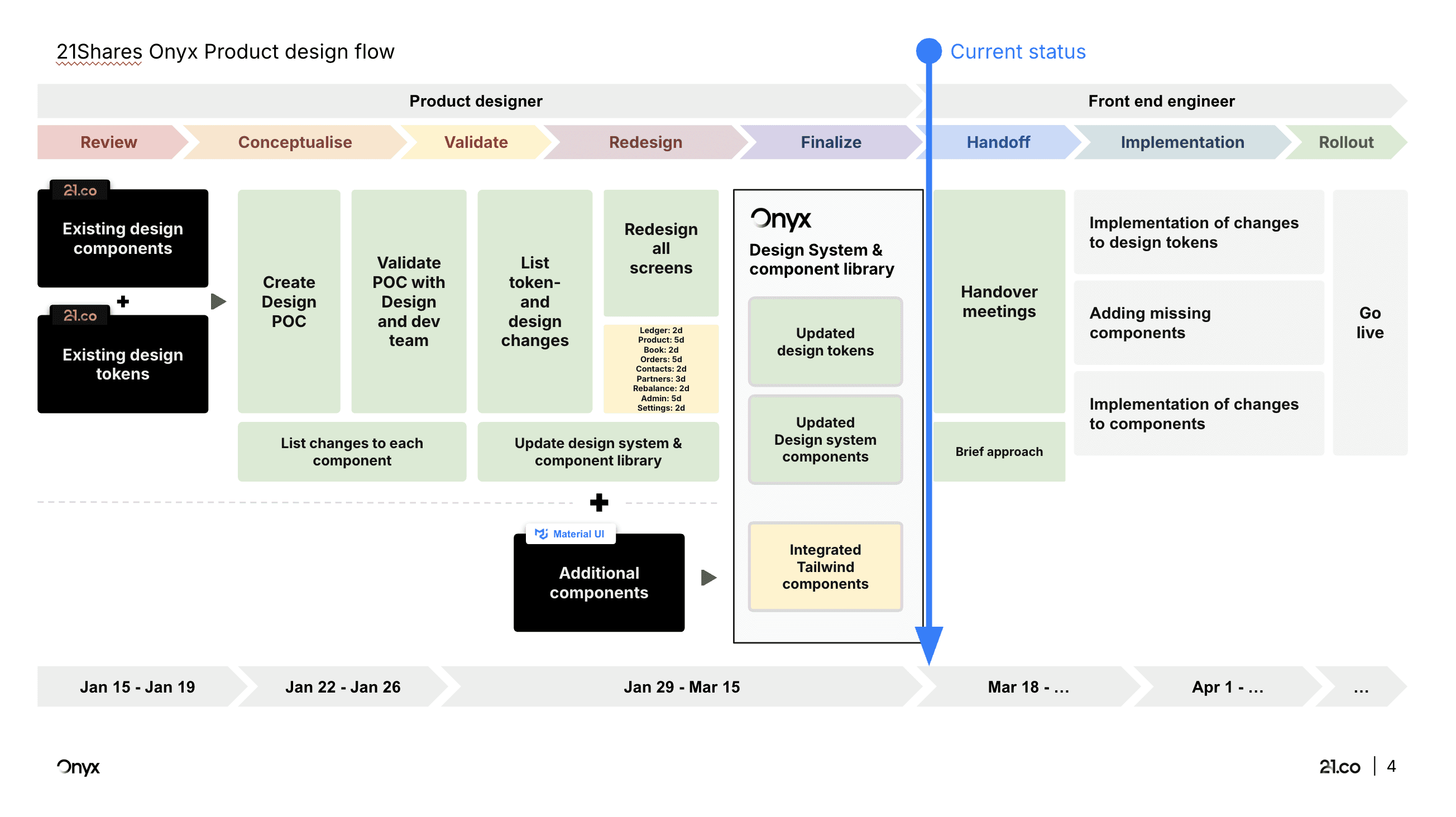
The redesign had to progress while engineers continued developing ONYX. I planned the roadmap and milestones with the CTO and engineering team, using the workflow map and component audit to decide what needed to be resolved first. The sequence covered the shared component foundation, the core journeys and the screen sets engineering needed for implementation.
The redesign had to progress while engineers continued developing ONYX. I planned the roadmap and milestones with the CTO and engineering team, using the workflow map and component audit to decide what needed to be resolved first. The sequence covered the shared component foundation, the core journeys and the screen sets engineering needed for implementation.
I ran sprint planning, stand-ups, retrospectives and stakeholder reviews, and established weekly design and delivery rituals. These meetings connected the next milestone to the work in progress, giving us regular opportunities to review priorities, surface blockers and work through design or implementation questions. I guided the team towards the agreed milestones and deadlines while staying involved in the detailed interface work and the constraints engineers were facing.
I ran sprint planning, stand-ups, retrospectives and stakeholder reviews, and established weekly design and delivery rituals. These meetings connected the next milestone to the work in progress, giving us regular opportunities to review priorities, surface blockers and work through design or implementation questions. I guided the team towards the agreed milestones and deadlines while staying involved in the detailed interface work and the constraints engineers were facing.
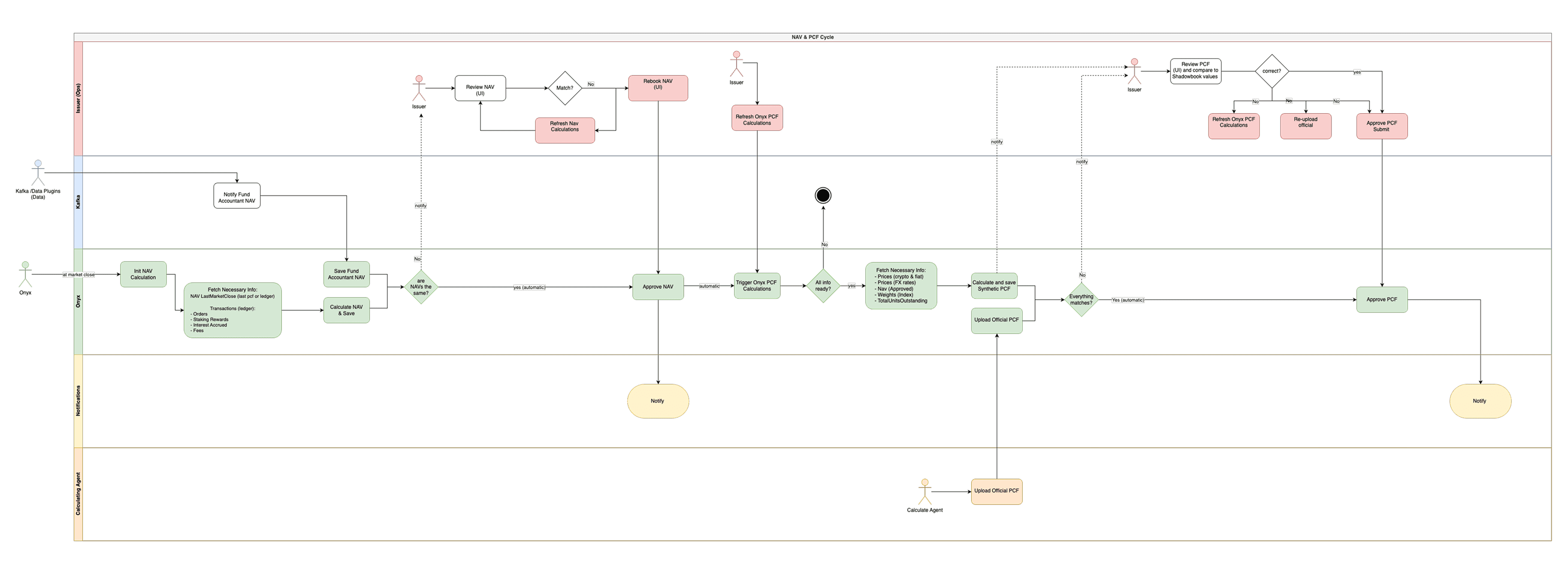
I ran interviews and surveys with power users across NAV, PCF, rebalancing, fund accounting, orders and exceptions. I mapped the recurring cycles and handoffs behind the screens to expose gaps in status, ownership and exception handling.
I ran interviews and surveys with power users across NAV, PCF, rebalancing, fund accounting, orders and exceptions. I mapped the recurring cycles and handoffs behind the screens to expose gaps in status, ownership and exception handling.
I used the operating model to sequence the navigation and dashboard work. I tested the core journeys in prototypes while engineering kept building the product. I moved blocking work, current status and ownership ahead of routine tasks.
I used the operating model to sequence the navigation and dashboard work. I tested the core journeys in prototypes while engineering kept building the product. I moved blocking work, current status and ownership ahead of routine tasks.
NAV and PCF lifecycle map connecting issuer actions, data services, ONYX and calculation steps.
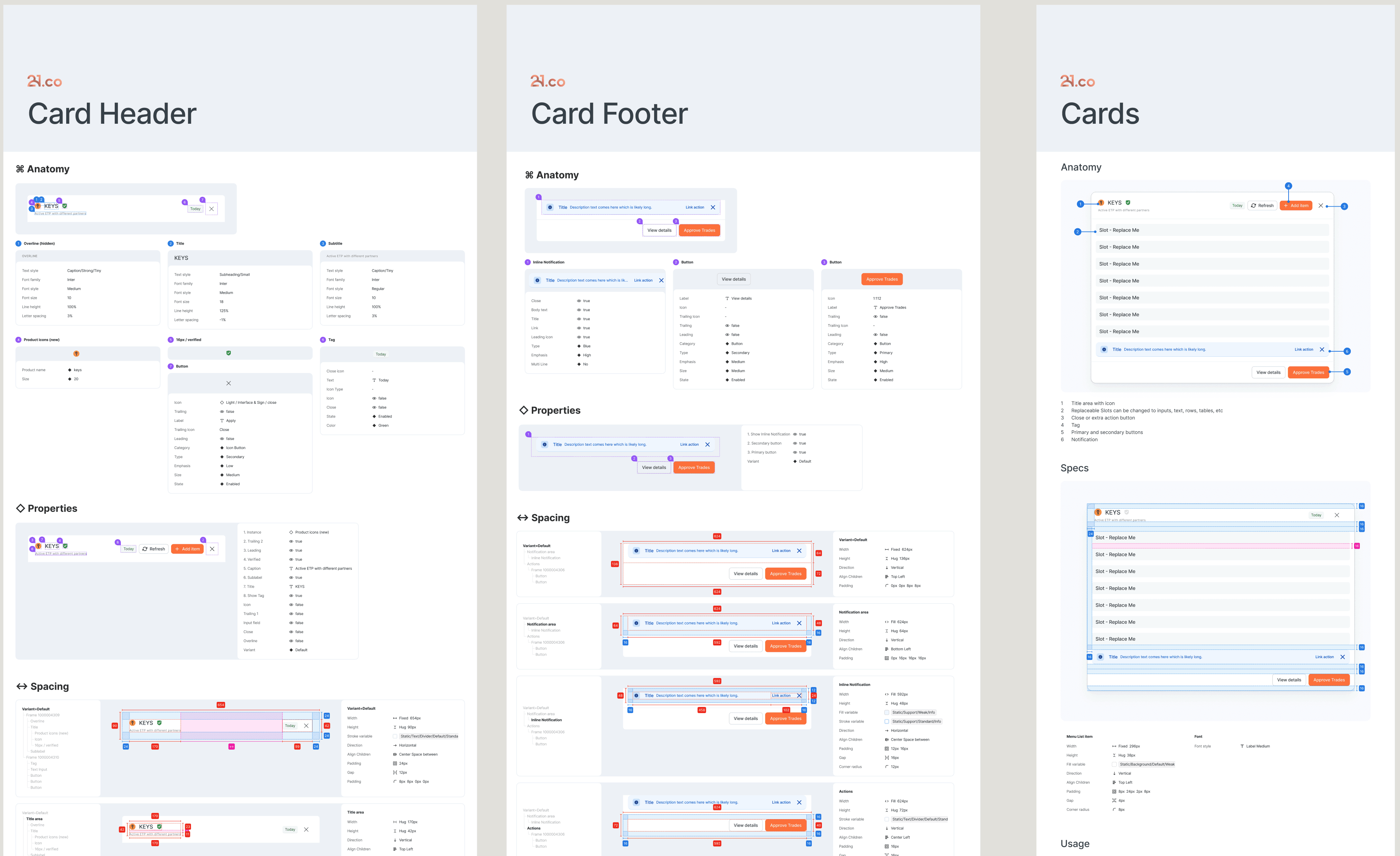
I mapped the legacy components to the patterns that repeated across workflows, removed styles that were no longer used and kept the first changes close to existing behaviour. This let engineering keep moving while I built the shared rules for both themes.
I mapped the legacy components to the patterns that repeated across workflows, removed styles that were no longer used and kept the first changes close to existing behaviour. This let engineering keep moving while I built the shared rules for both themes.
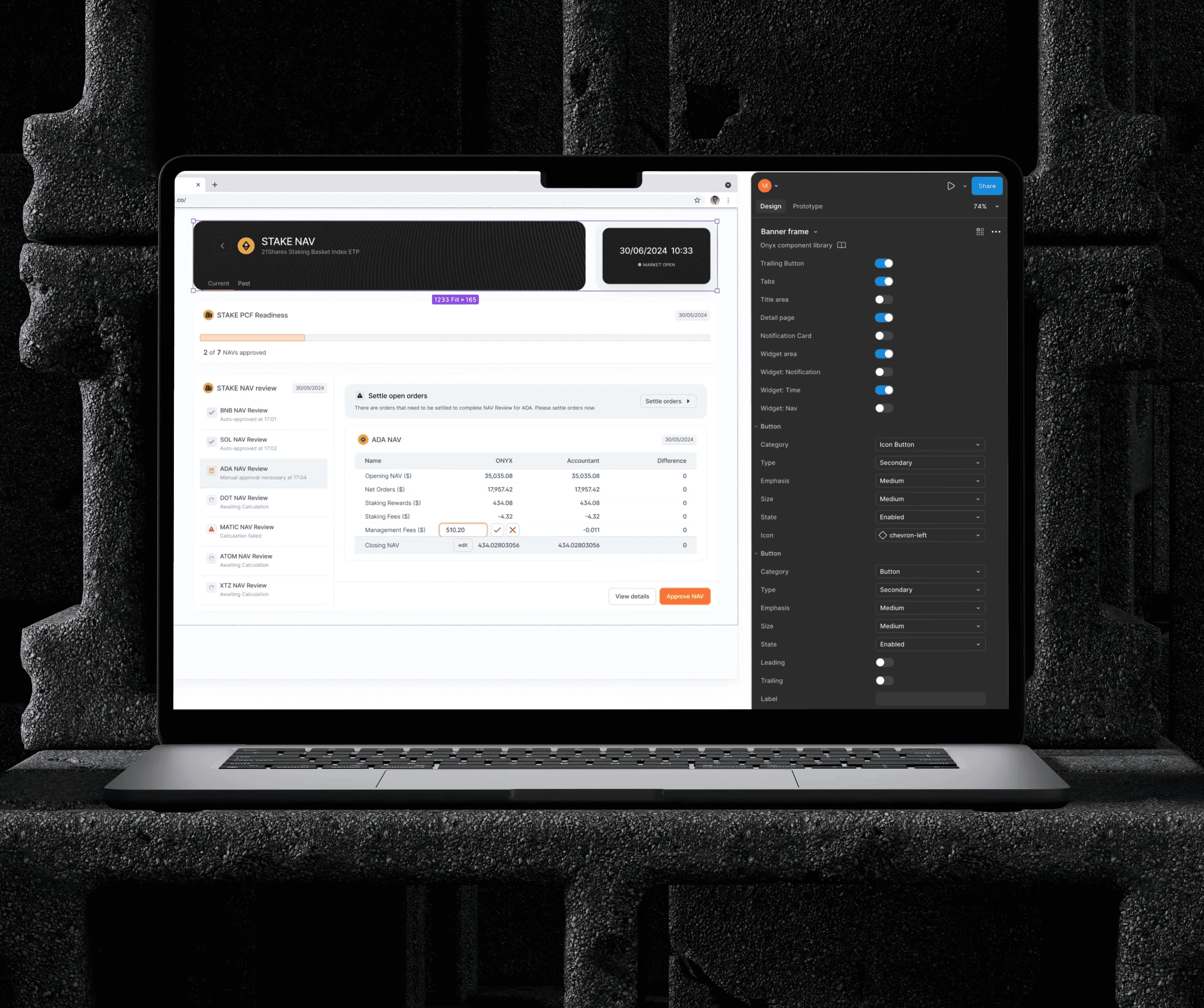
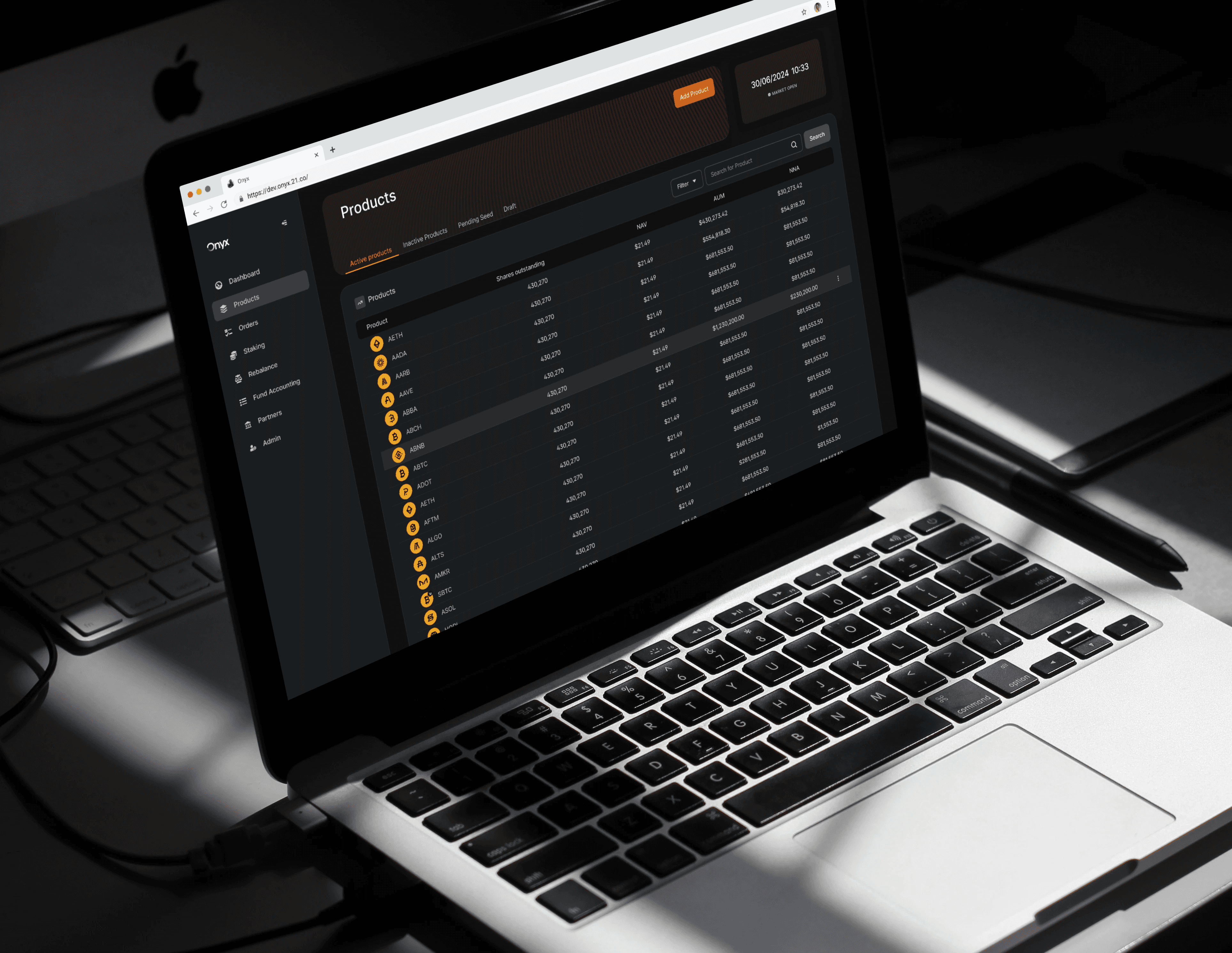
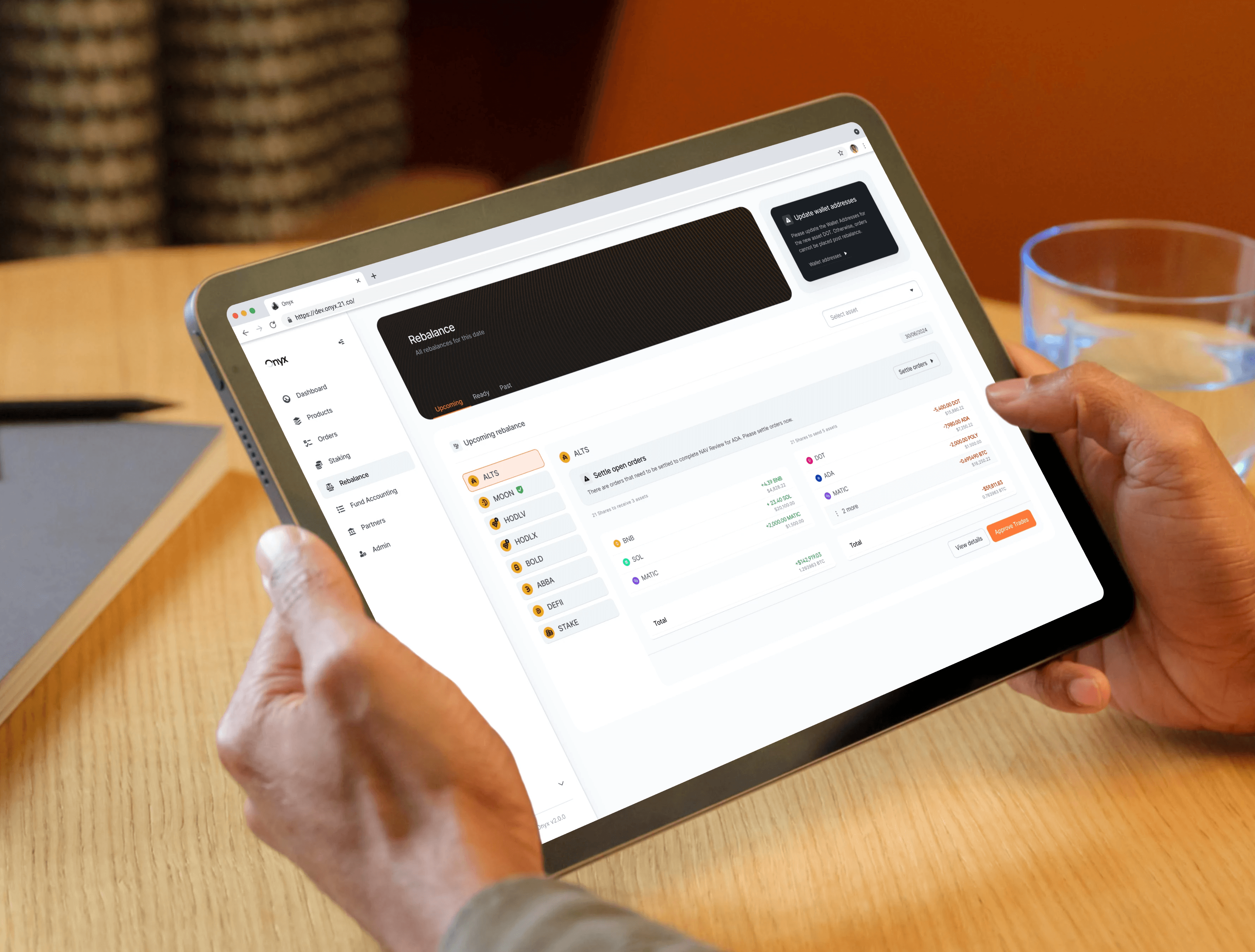
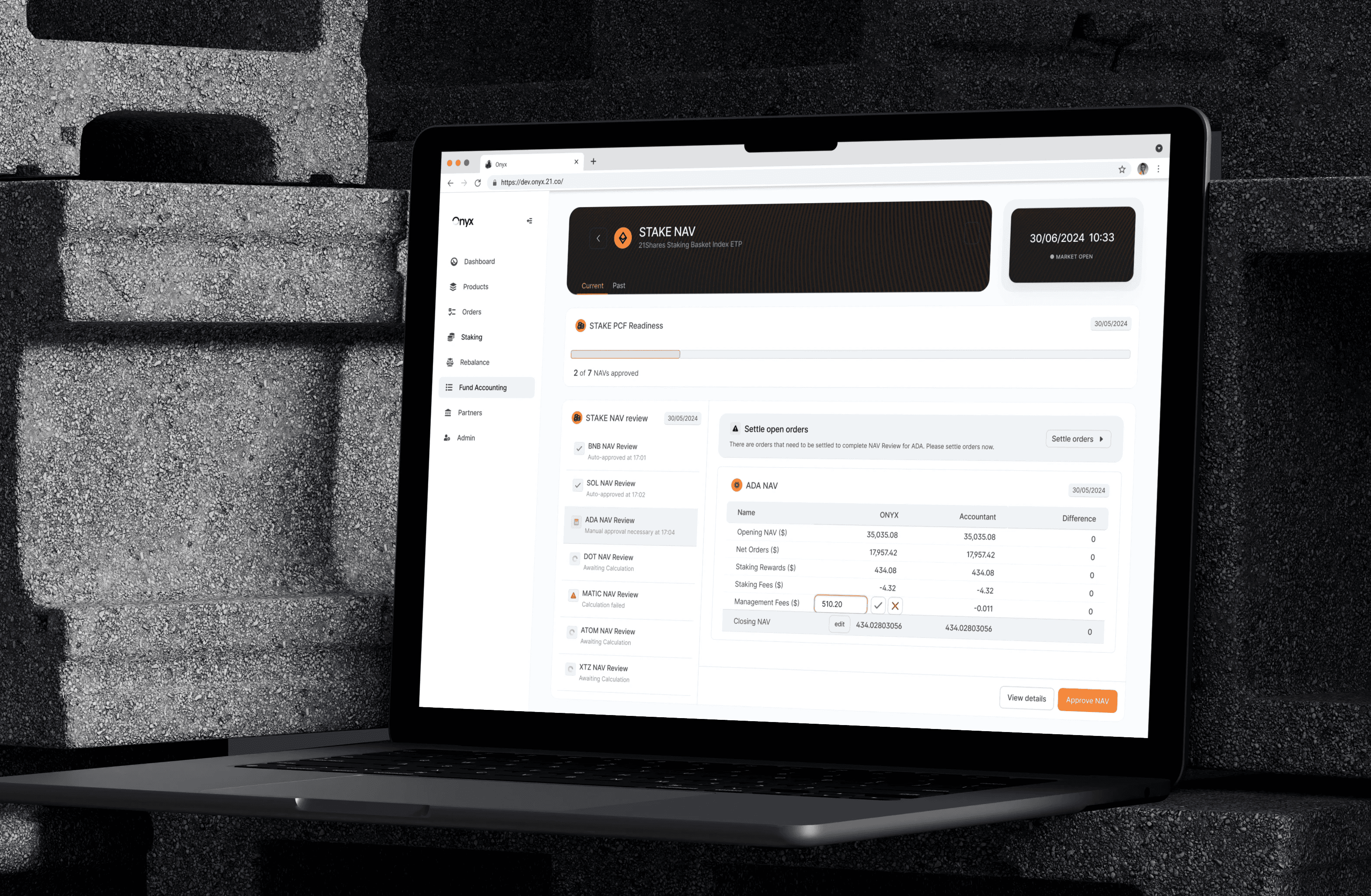
I redesigned orders, product management, allocation and rebalancing around the information operators needed at each step. Status, consequences and the next action stayed visible, so people could follow a change without losing the fund context around it.
I redesigned orders, product management, allocation and rebalancing around the information operators needed at each step. Status, consequences and the next action stayed visible, so people could follow a change without losing the fund context around it.
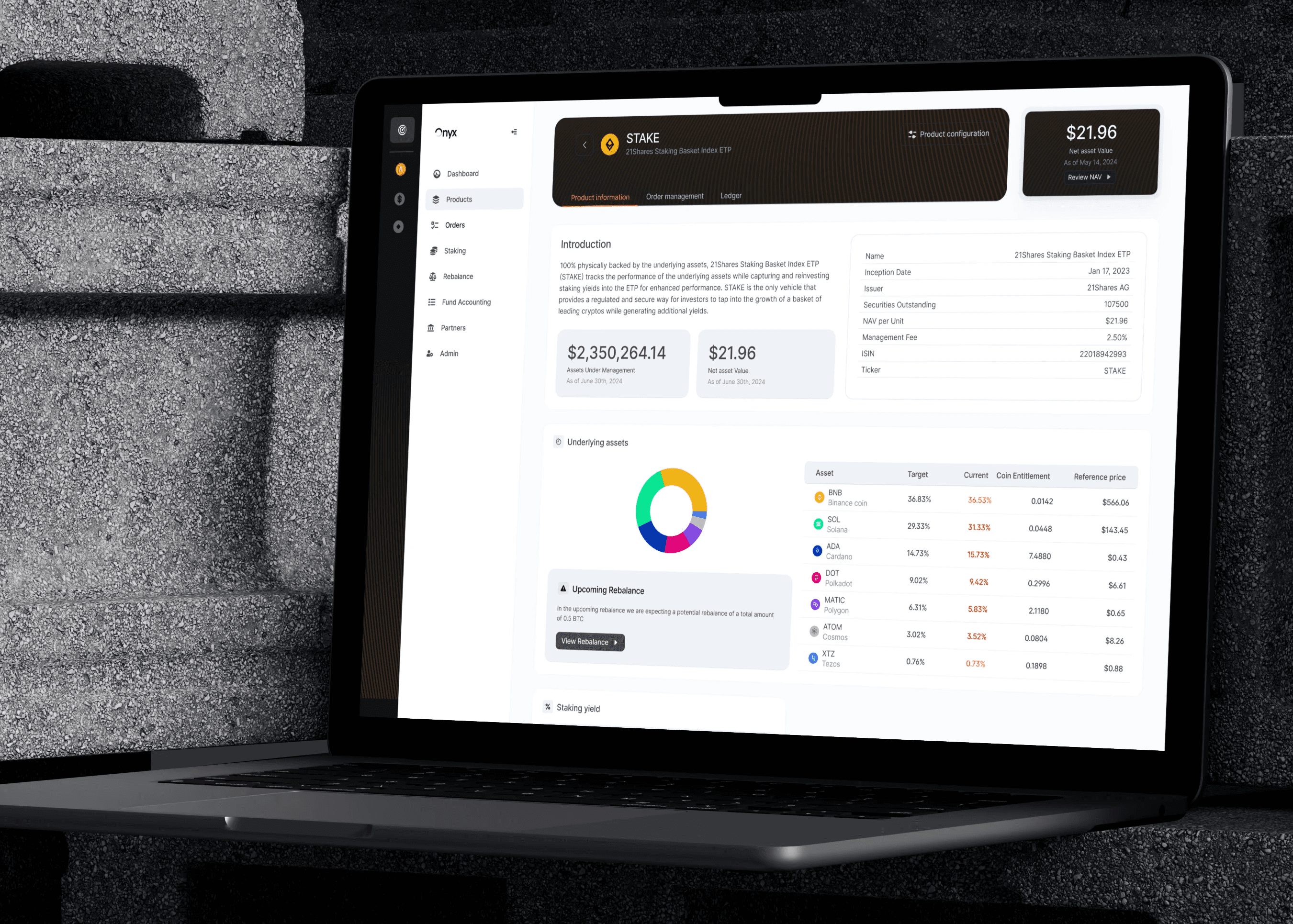
The allocation view organises dense product data around the decisions operators need to make.
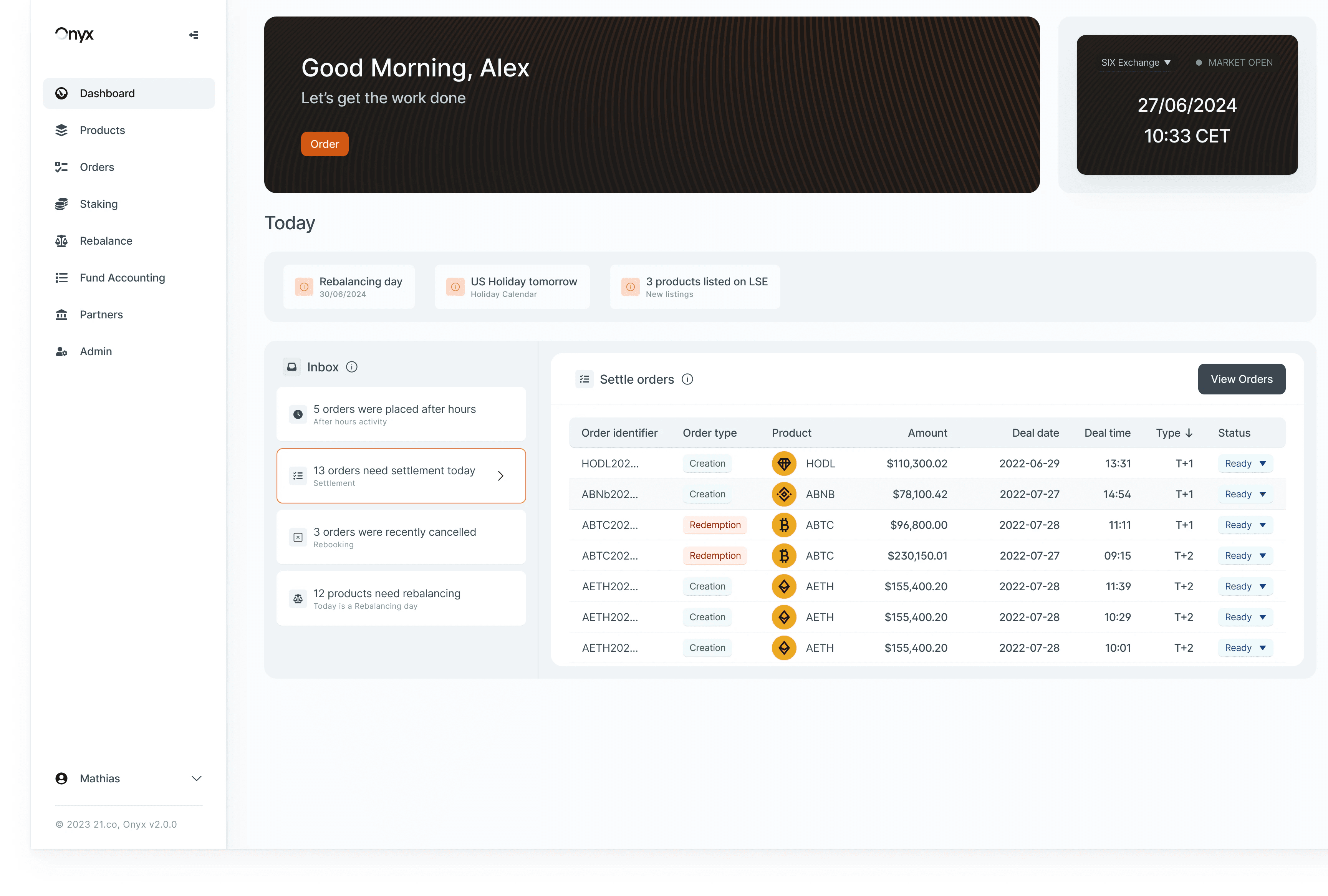
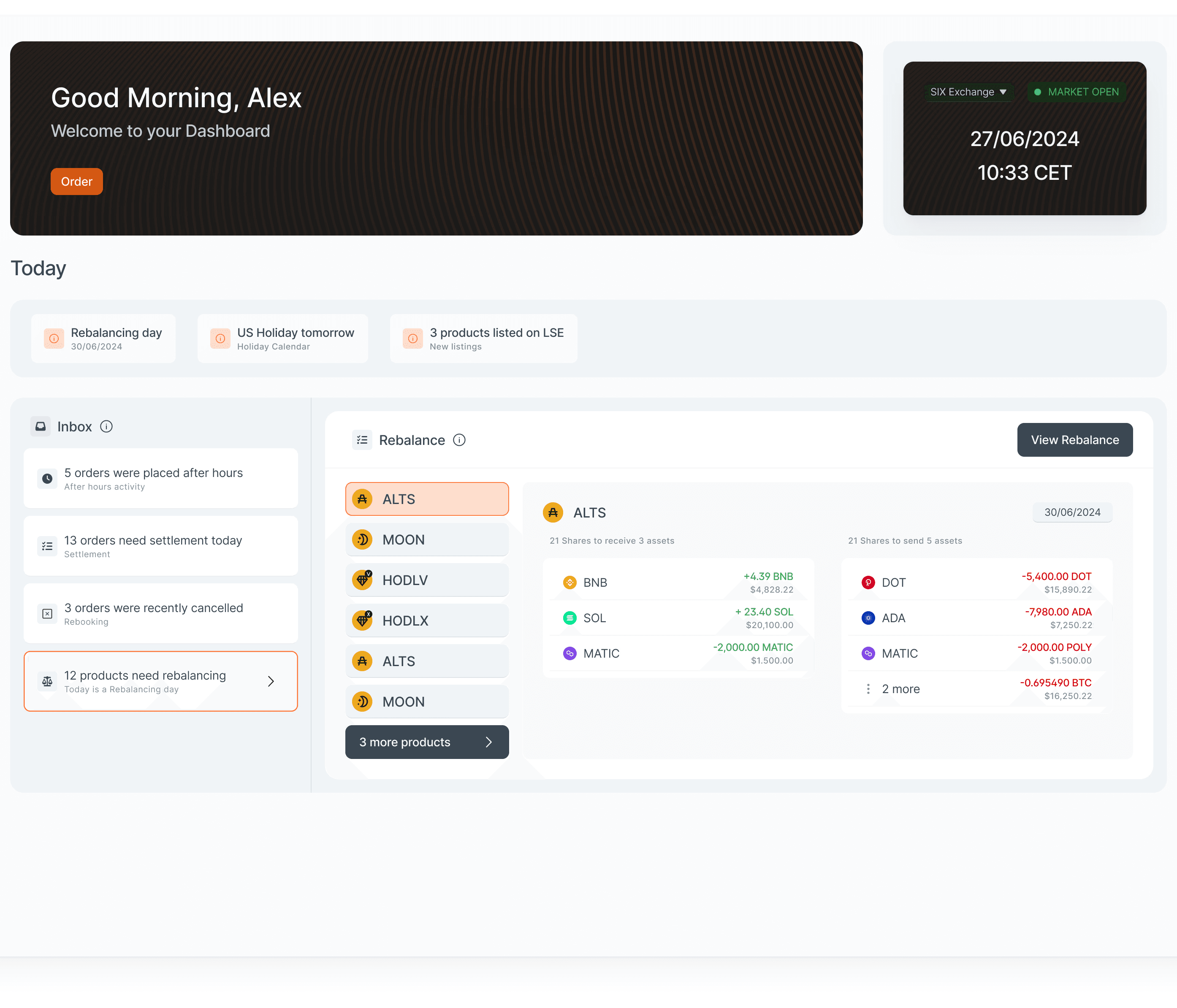
I placed work that could block a fund or deadline at the top of the dashboard, with its current status and owner beside it. Operators could see what needed attention and who was responsible without opening each item first.
I placed work that could block a fund or deadline at the top of the dashboard, with its current status and owner beside it. Operators could see what needed attention and who was responsible without opening each item first.


I delivered the documented dual-theme framework, the full V2 screen set and the workflow designs for orders, products, allocation and rebalancing. The work gave engineering one set of component and state rules while keeping the daily fund priorities visible across the product.
I delivered the documented dual-theme framework, the full V2 screen set and the workflow designs for orders, products, allocation and rebalancing. The work gave engineering one set of component and state rules while keeping the daily fund priorities visible across the product.
Following the redesign, ETF creation was approximately 67% faster, support tickets fell by around 39%, and PCF errors could be detected in minutes rather than hours. These team results were reported by Filip Geschwandtner, who managed product design at the time.
Following the redesign, ETF creation was approximately 67% faster, support tickets fell by around 39%, and PCF errors could be detected in minutes rather than hours. These team results were reported by Filip Geschwandtner, who managed product design at the time.
ONYX is the ETF order-management platform used by the 21Shares team. I led the V2 redesign in 2024 with the CTO and three engineers, from research and workflow mapping through the complete light and dark screen set. The product brought NAV, PCF, fund accounting, orders, rebalancing and exceptions into one daily operating environment. The platform processed more than $8.5B in creation and redemption orders across 50+ products, as reported by Filip Geschwandtner, who managed product design at the time.
The existing product made routine work harder to follow. Components were duplicated, forms behaved inconsistently and important steps were easy to miss. Unclear status, ownership and exceptions made multi-step work harder to manage. I focused the redesign on one interface system and a dashboard that put urgent work, lifecycle status and ownership before routine tasks.
The redesign had to progress while engineers continued developing ONYX. I planned the roadmap and milestones with the CTO and engineering team, using the workflow map and component audit to decide what needed to be resolved first. The sequence covered the shared component foundation, the core journeys and the screen sets engineering needed for implementation.
I ran sprint planning, stand-ups, retrospectives and stakeholder reviews, and established weekly design and delivery rituals. These meetings connected the next milestone to the work in progress, giving us regular opportunities to review priorities, surface blockers and work through design or implementation questions. I guided the team towards the agreed milestones and deadlines while staying involved in the detailed interface work and the constraints engineers were facing.
I interviewed power users across NAV, PCF, rebalancing, fund accounting, orders and exceptions. They showed me where unclear status, ownership and handoffs slowed the work down, which gave us an order for the navigation and dashboard changes. I also mapped the recurring fund cycles behind the interface, exposing dependencies the old navigation had hidden.
Engineering was still working on the product, so I kept the redesign staged. I mapped the legacy workflows and components first, then stabilised the component library before redesigning and testing the core journeys in working prototypes. The first changes stayed close to existing behaviour, while the operating model showed us where the product structure needed to change.
The audit found duplicate components, unused styles and inconsistent states. I consolidated variants and sizes around the patterns that repeated across workflows, then aligned colour, spacing, typography, elevation and state tokens across the light and dark themes. I mapped the shared framework defaults into the design system so the engineers needed fewer one-off solutions.
I documented component anatomy, variants, sizes, usage rules and the hover, focus, selected, processing, success and error states. Each handoff combined behaviour, measurements and implementation notes. This gave the engineers a clear specification for tables, forms, navigation and notifications while keeping the work compatible with the frameworks already used in the product.
I redesigned orders, product management, allocation and rebalancing around the information operators needed at each step. Product information, settings and rebalancing actions stayed together. Order flows used the same lifecycle and status patterns, and I organised dense allocation data around the decisions operators needed to make. The dashboard placed work that could block a fund or deadline at the top, with its owner and current status beside it.
I delivered the documented dual-theme framework, the full V2 screen set and a dashboard organised around daily priorities. The work covered the operating model, components and workflow screens while the engineers continued building the product.
Following the redesign, ETF creation was approximately 67% faster, support tickets fell by around 39%, and PCF errors could be detected in minutes rather than hours. These team results were reported by Filip Geschwandtner, who managed product design at the time.
More work
AI product · 2025
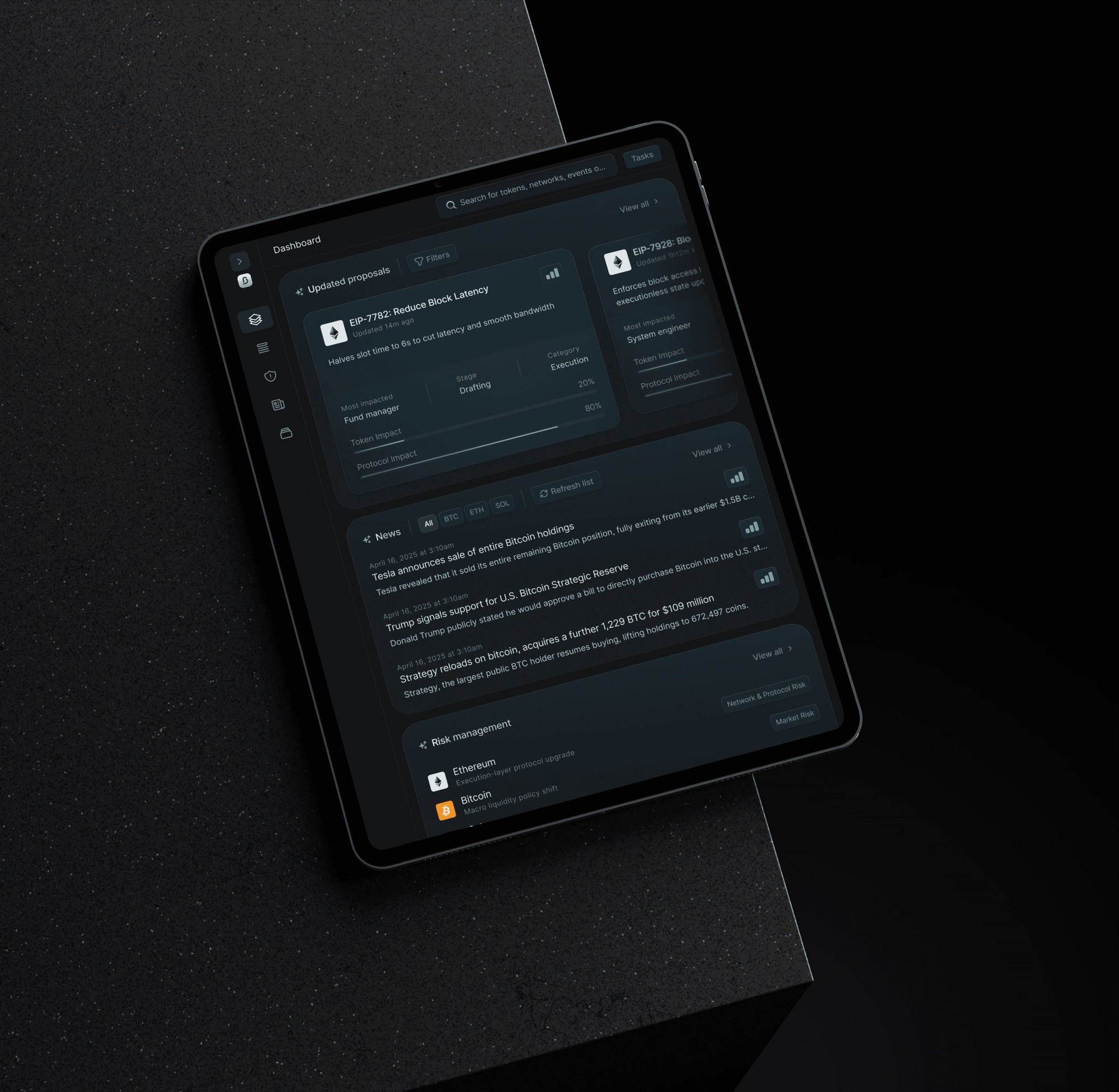
Crypto governance and news intelligence for institutional teams.
Crypto intelligence for institutional teams.
View case studyView→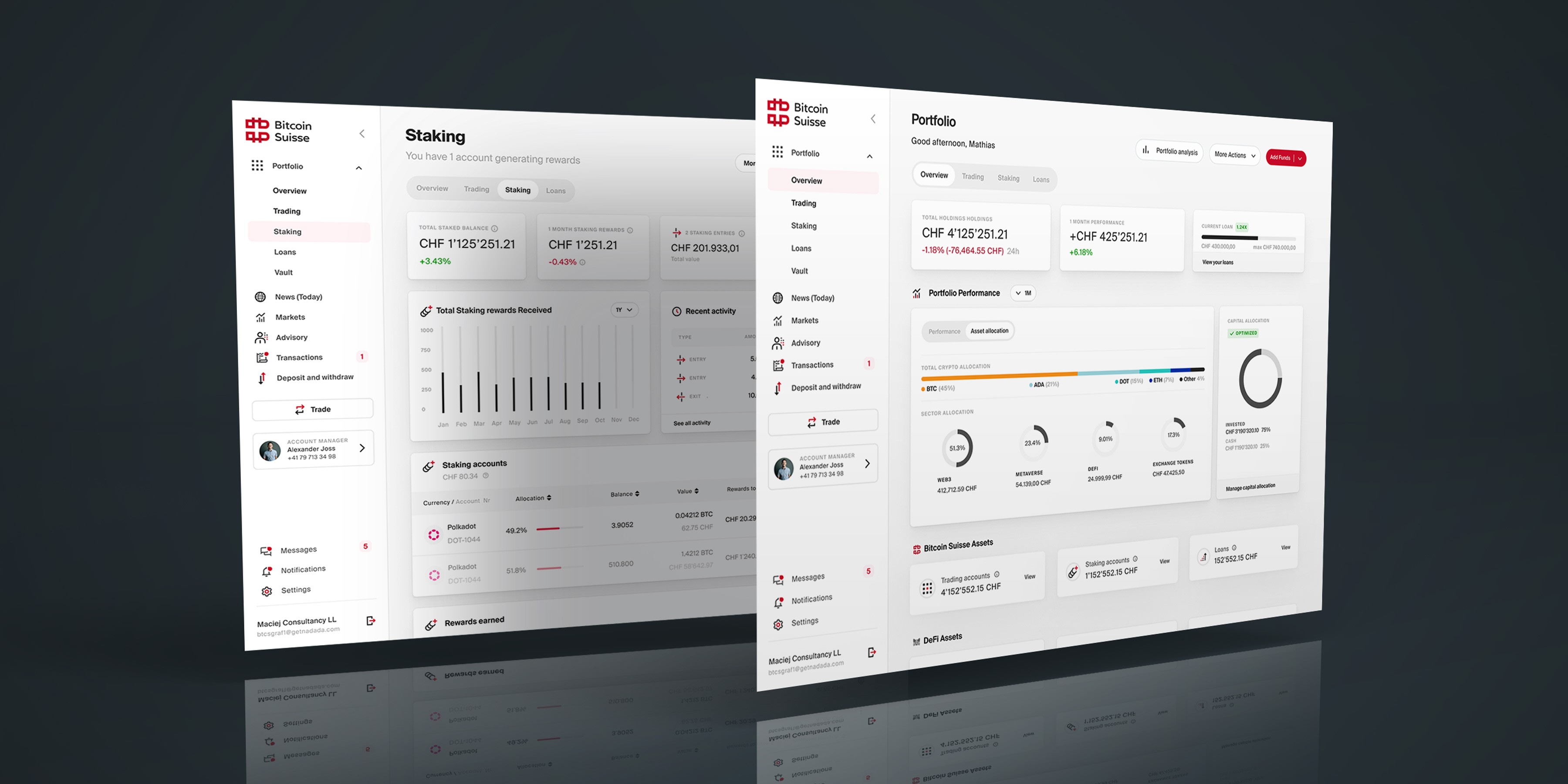
Portfolio redesign · 2023
A unified model for holdings, accounts, performance and liabilities.
A unified model for holdings, accounts and performance.
View case studyView→
Investment platform · 2020–21
Responsive investment journeys backed by a better design and engineering delivery process.
Responsive journeys and a better delivery process.
View case studyView→
AI direction · 2026
An AI-directed rental product shaped through focused exploration, critique and refinement.
An AI-directed rental product and prototype.
View case studyView→