BlockSens.ai

BlockSens.ai

BlockSens.ai

Crypto governance and news intelligence for institutional teams.

Crypto governance and news intelligence for institutional teams.

โ† Back

BlockSensai dashboard shown on a tablet in a dark studio setting

Scoring the market impact of crypto governance proposals and news for institutional teams.

RoleLead Product DesignerTeam6 engineers, 3 data scientists, 1 product manager
ScopeMVP to alpha
Research
InterviewsWorkshopsUser tests
Model
TaxonomyScoringLLM summaries
Design
DashboardsFeedDesign system
Stage4 of 5
Concept
PoC
MVP
Alpha
Beta

Front-end delivery became three times faster over four months, with higher UI consistency in usability tests.

Company21Shares
Year2025
ToolsFigma, Notion, Linear, ChatGPT, LangSmith

Turning governance research into an intelligence product

Turning governance research into an intelligence product

At 21Shares, I led discovery and design for BlockSensai from the first idea through the alpha. I worked with six engineers, three data scientists and a product manager to try to create a scoring model for indexing the impact of crypto governance proposals and news on markets.

At 21Shares, I led discovery and design for BlockSensai from the first idea through the alpha. I worked with six engineers, three data scientists and a product manager to try to create a scoring model for indexing the impact of crypto governance proposals and news on markets.

For the research part, I interviewed people across five institutional roles to understand how they assessed governance proposals and news. Those conversations shaped the classification and scoring model that I worked on with the data science and engineering teams. We used this data model across dashboards, an intelligence feed and a later LLM experience, while I designed how impact of news and crypto governance events could be shown to users.

For the research part, I interviewed people across five institutional roles to understand how they assessed governance proposals and news. Those conversations shaped the classification and scoring model that I worked on with the data science and engineering teams. We used this data model across dashboards, an intelligence feed and a later LLM experience, while I designed how impact of news and crypto governance events could be shown to users.

My contributions

Research and analysis evidence

Research and analysis

I planned and ran interviews and testing sessions, then used AI to help organise and analyse the findings.
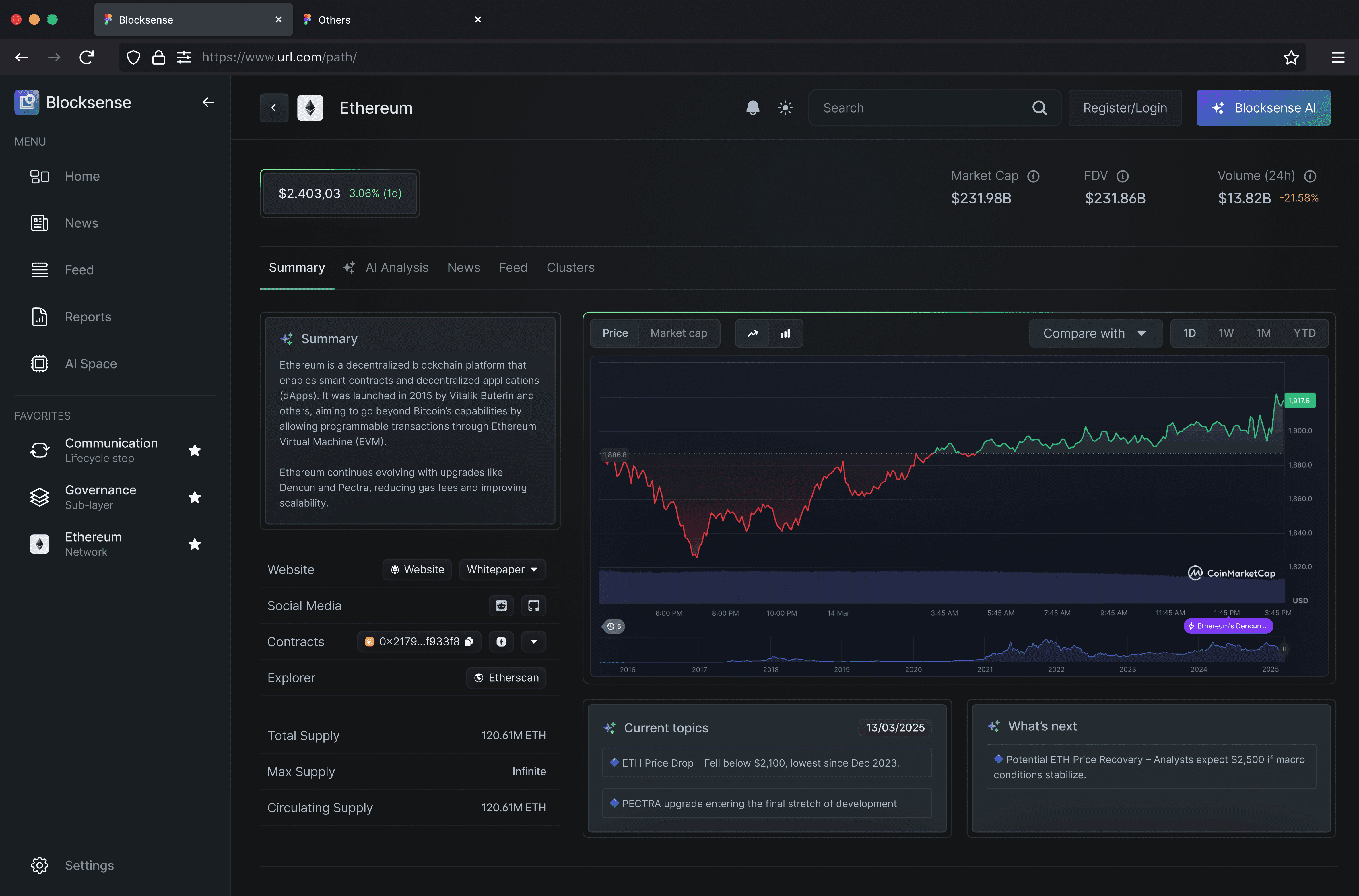
Concept design evidence

Concept design

I explored the first interfaces around the product idea and what we learned from user research.
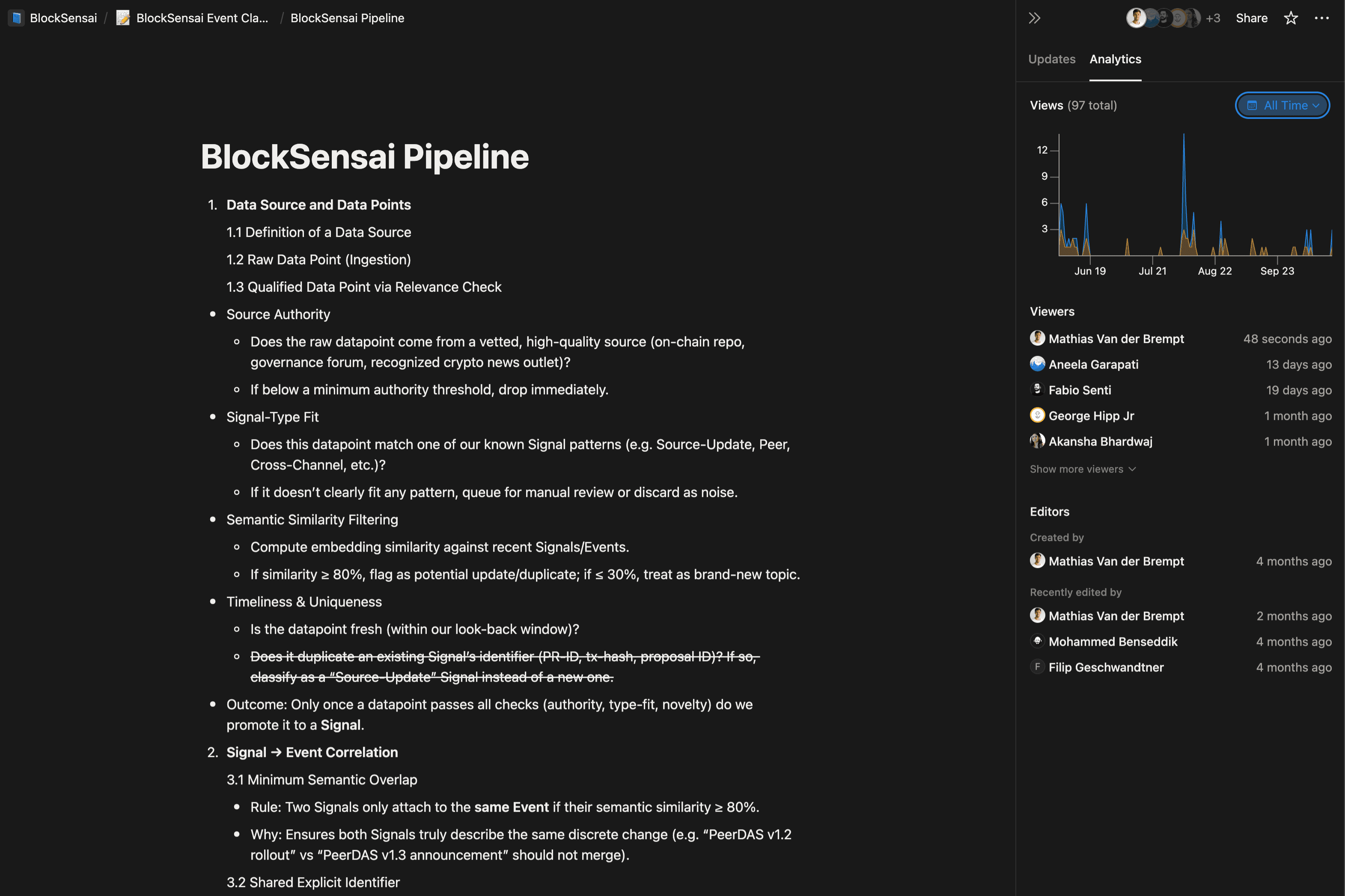
Data structure evidence

Data structure

I reworked the classification framework with data science and engineering so the product used clearer, shared terms.
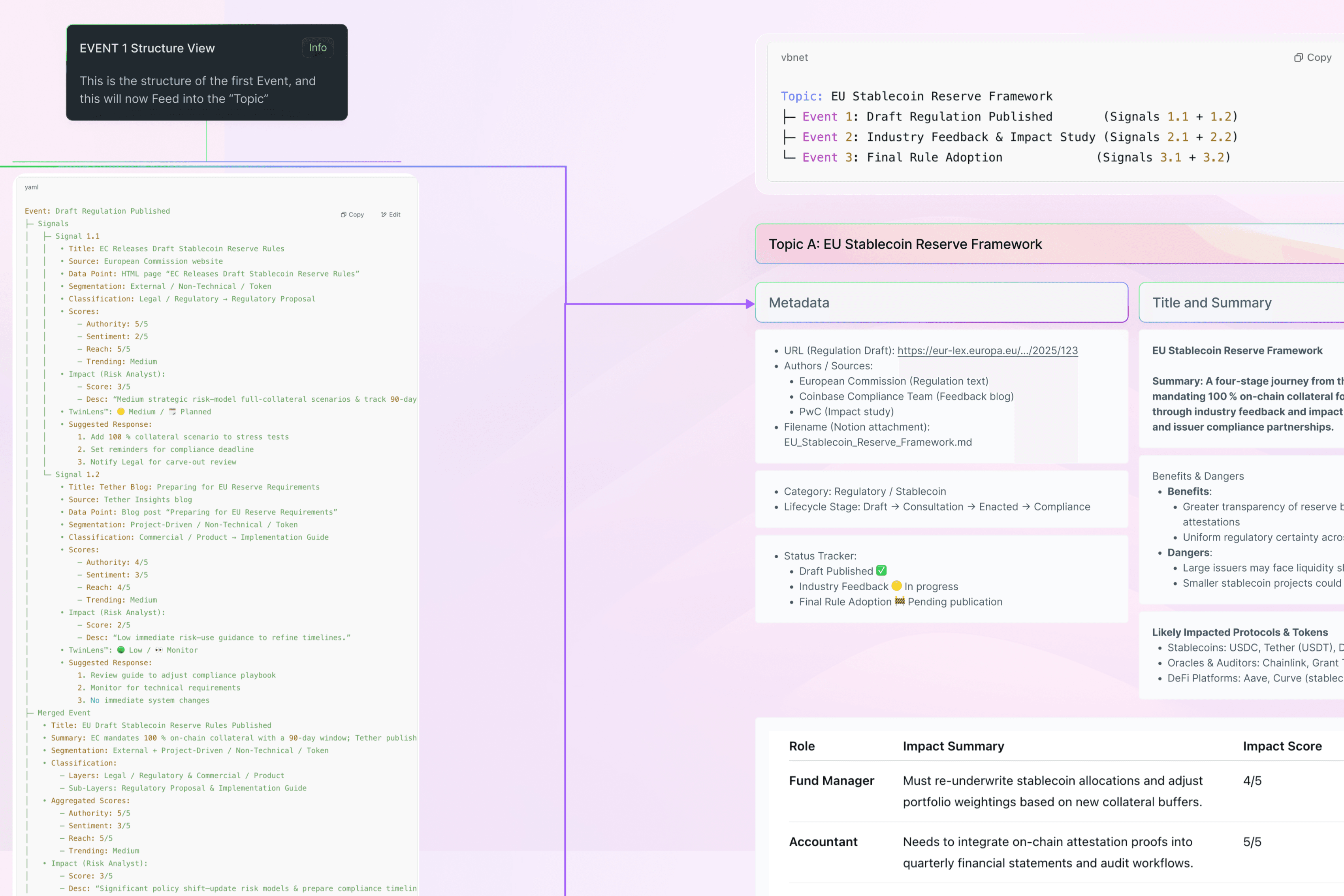
Application architecture evidence

Application architecture

I mapped how the product views and workflows fitted together, giving the team a shared application concept.

Colour system evidence

Colour system

I documented colour scales and their use across light and dark modes for the dense data interface.
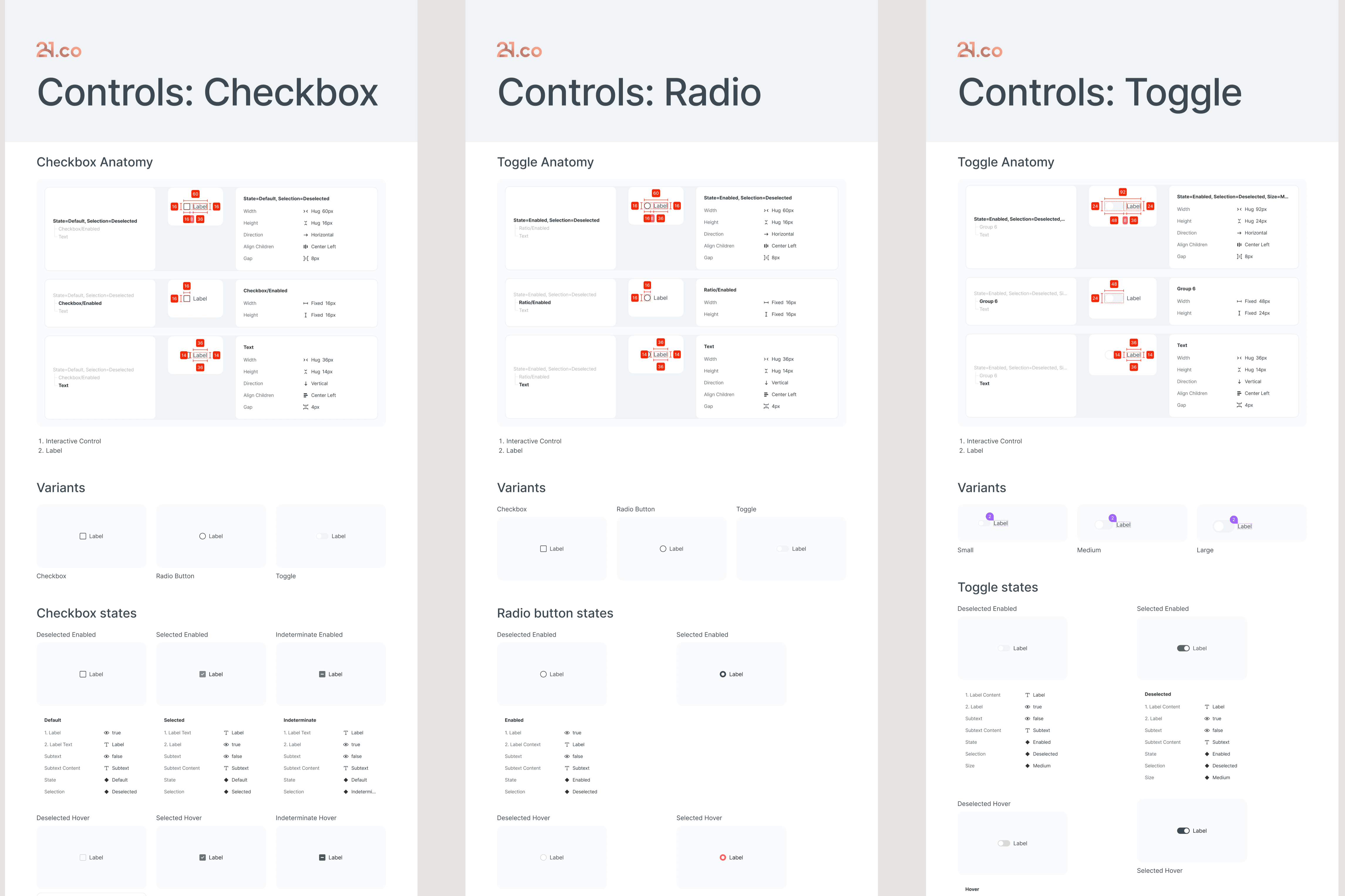
Design system evidence

Design system

I built the component library and documented states and usage so the team could extend the interface consistently.

Engineering collaboration evidence

Engineering collaboration

I defined implementation scope and worked through data requirements, design tokens and responsive behaviour with developers.

Delivery coordination evidence

Delivery coordination

I split front-end work into page-level tickets with separate UI and API tasks, making the next steps clearer for the team.

My contribution

My contribution

I scoped the proof of concept and conducted exploratory user interviews across several institutional roles. With data science and engineering, I worked on the classification and scoring model, documented the taxonomy and glossary, and designed how the findings would appear across dashboards, the intelligence feed and proposal views.

I scoped the proof of concept and conducted exploratory user interviews across several institutional roles. With data science and engineering, I worked on the classification and scoring model, documented the taxonomy and glossary, and designed how the findings would appear across dashboards, the intelligence feed and proposal views.

I created the light and dark component system and connected the screens to data definitions, responsive rules and acceptance criteria. Alongside that work, I coordinated roadmap and milestone planning with product and engineering, ran the teamโ€™s delivery rituals and managed two engineers during implementation phases. I wrote guides for the data and front-end teams, organised page-level tickets and reviewed the build with engineering.

I created the light and dark component system and connected the screens to data definitions, responsive rules and acceptance criteria. Alongside that work, I coordinated roadmap and milestone planning with product and engineering, ran the teamโ€™s delivery rituals and managed two engineers during implementation phases. I wrote guides for the data and front-end teams, organised page-level tickets and reviewed the build with engineering.

BlockSensai news and market-intelligence product shown on a dark laptop
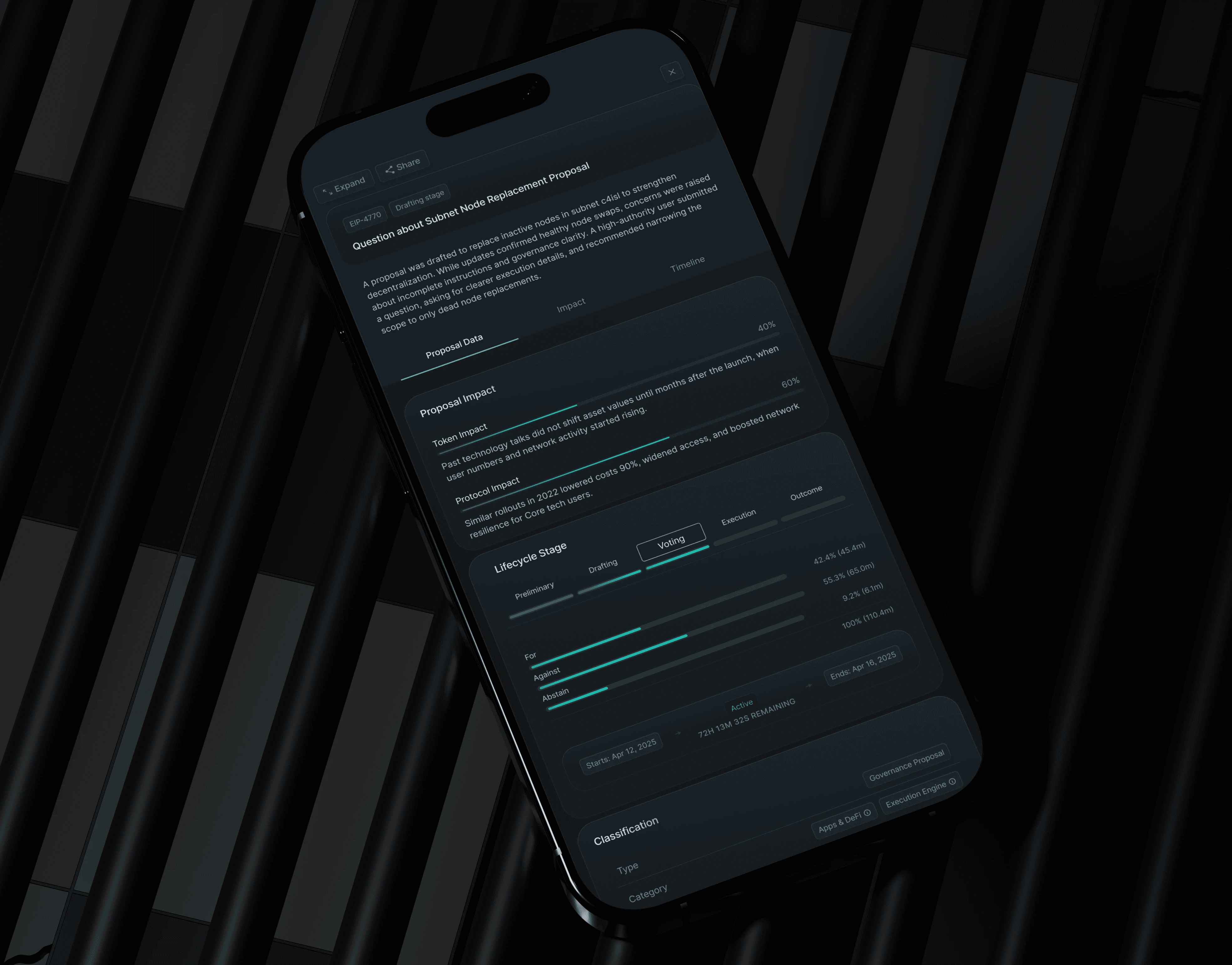
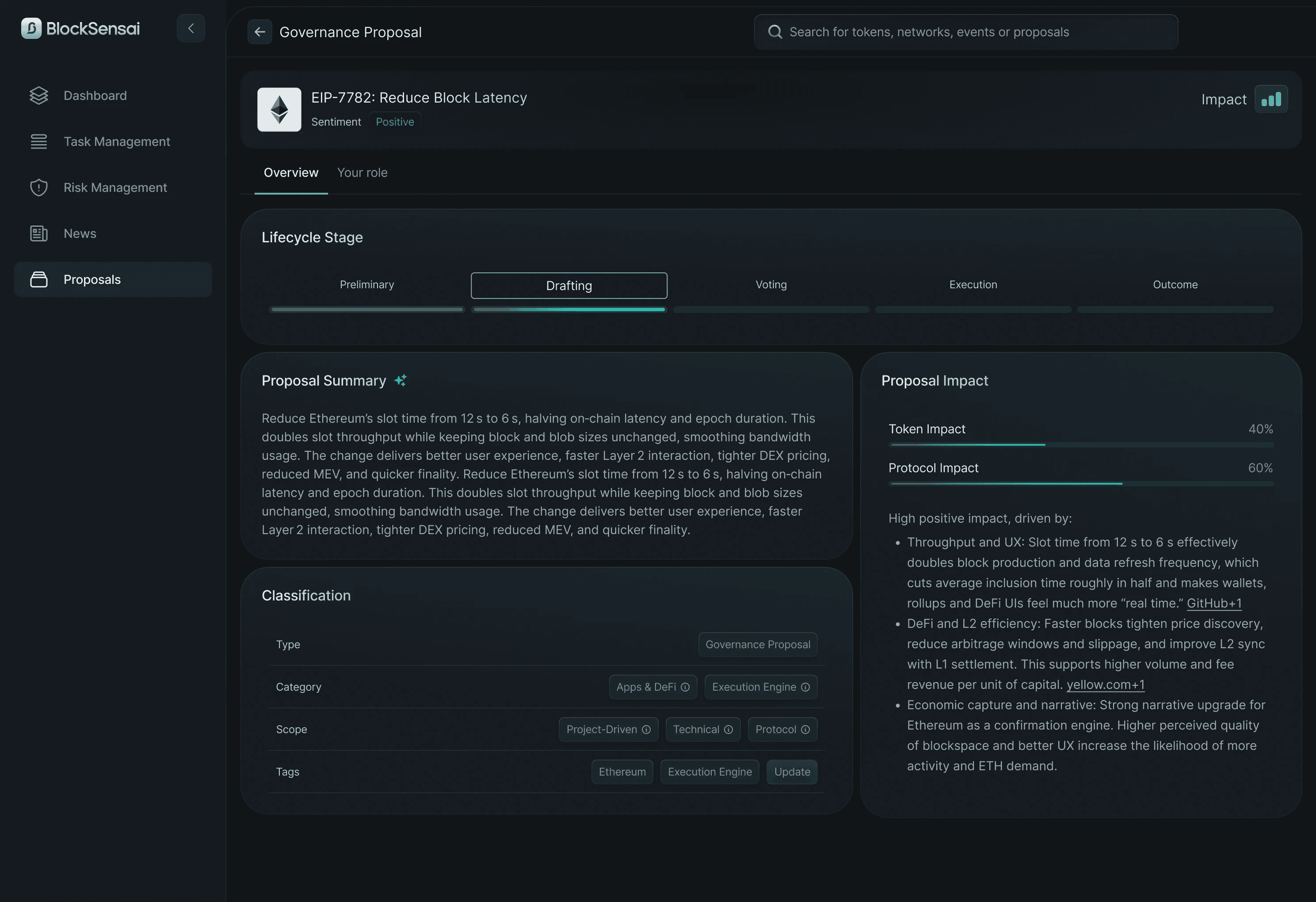
Finished BlockSensai proposal overview with lifecycle, classification, impact, and source timeline
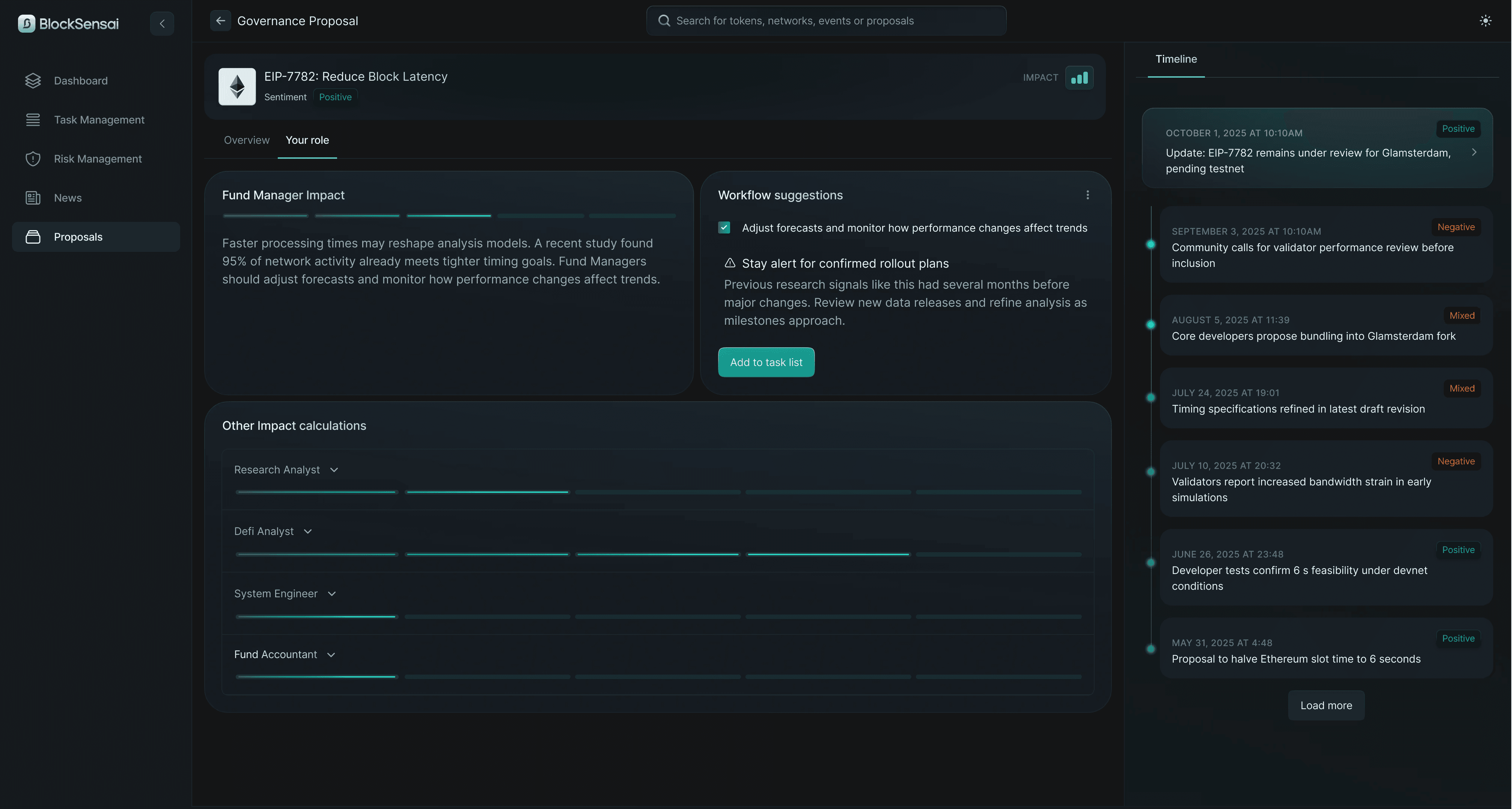
Finished BlockSensai role-impact view with workflow suggestions and evidence timeline
BlockSensai dashboard and governance tasks shown on a tablet
BlockSensai news and market-intelligence product shown on a dark laptop
BlockSensai dashboard and governance tasks shown on a tablet
Finished BlockSensai proposal overview with lifecycle, classification, impact, and source timeline
Finished BlockSensai role-impact view with workflow suggestions and evidence timeline

01 / Research

Finding what institutional users needed to judge

Finding what institutional users needed to judge

I interviewed 50 potential users from MetaMask, Crypto.com, Messari and other big companies across five institutional roles. I organized and ran stakeholder and user workshops, then used concept walkthroughs to test the emerging direction. I documented the evidence in transcripts and insight summaries, then converted it into a value canvas and weighted priority list.

I interviewed 50 potential users from MetaMask, Crypto.com, Messari and other big companies across five institutional roles. I organized and ran stakeholder and user workshops, then used concept walkthroughs to test the emerging direction. I documented the evidence in transcripts and insight summaries, then converted it into a value canvas and weighted priority list.

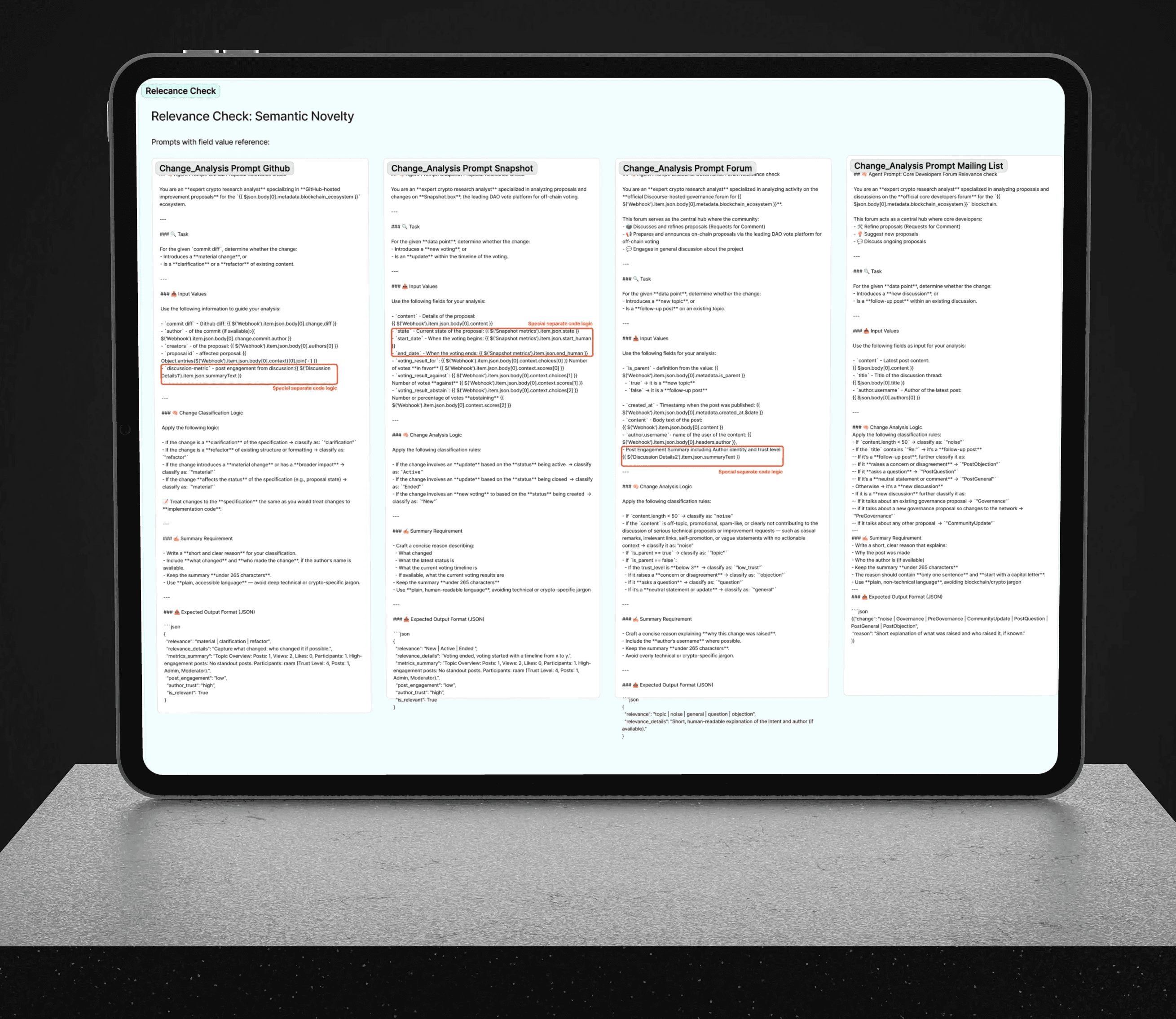
Participants judged proposals and price-sensitive news differently from the forum-led structure we started with. I used that finding to rebuild the taxonomy and glossary together with product, data science and engineering. The new model kept provenance and confidence visible, and separated proposal impact from event and news impact.

Participants judged proposals and price-sensitive news differently from the forum-led structure we started with. I used that finding to rebuild the taxonomy and glossary together with product, data science and engineering. The new model kept provenance and confidence visible, and separated proposal impact from event and news impact.

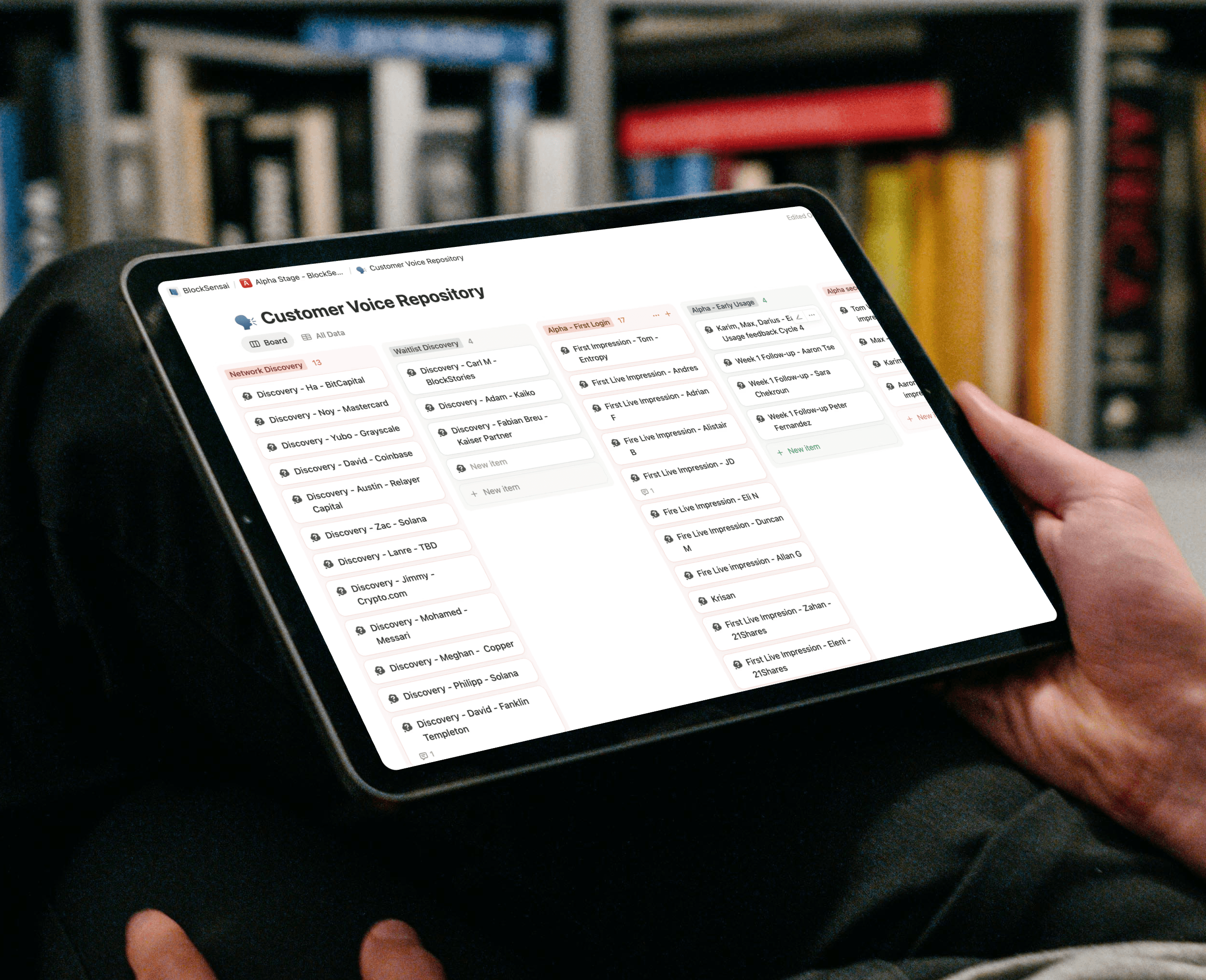
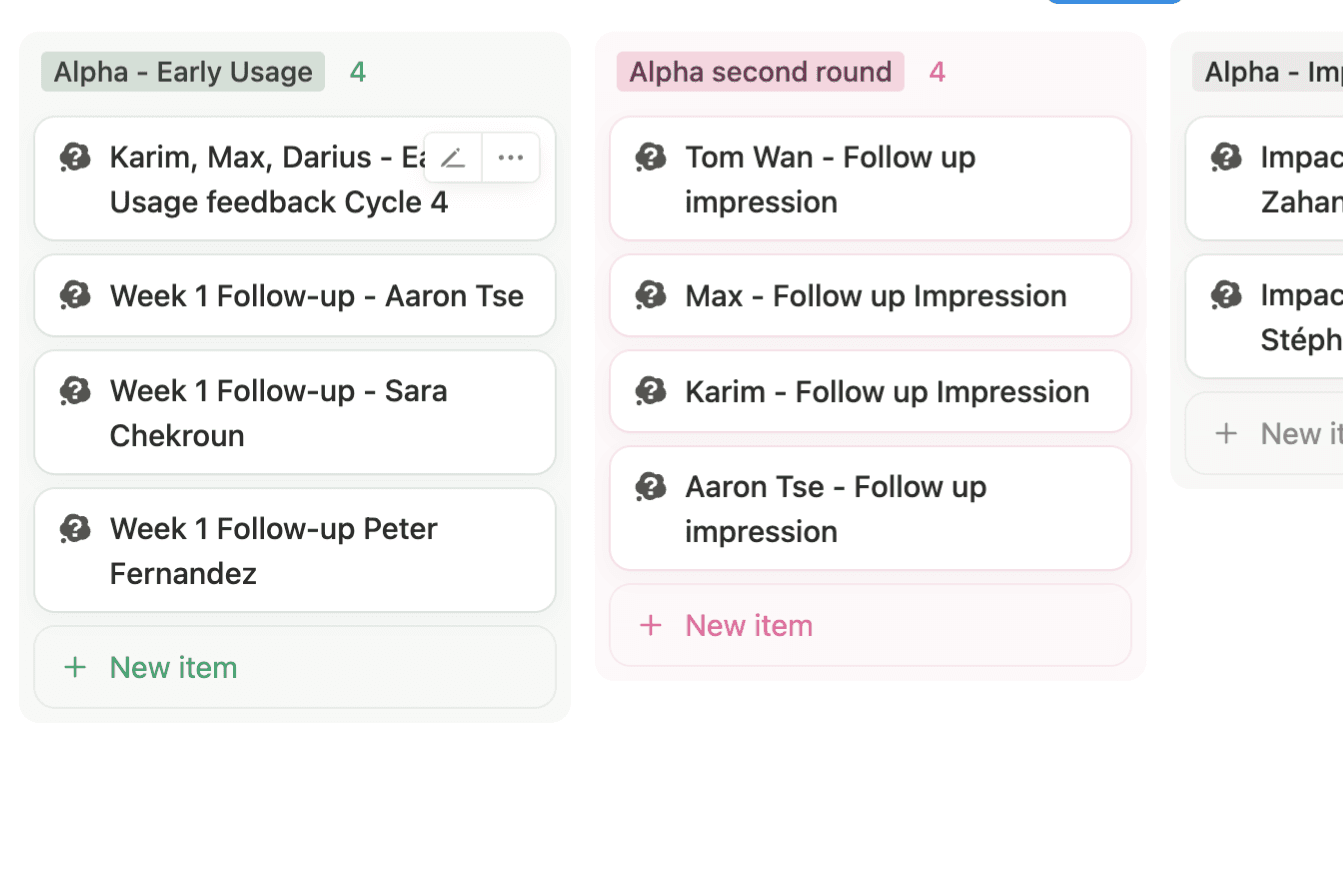
BlockSensai customer-voice repository used across interviews, workshops and follow-up research

Replacing forum terminology with a shared product model

Replacing forum terminology with a shared product model

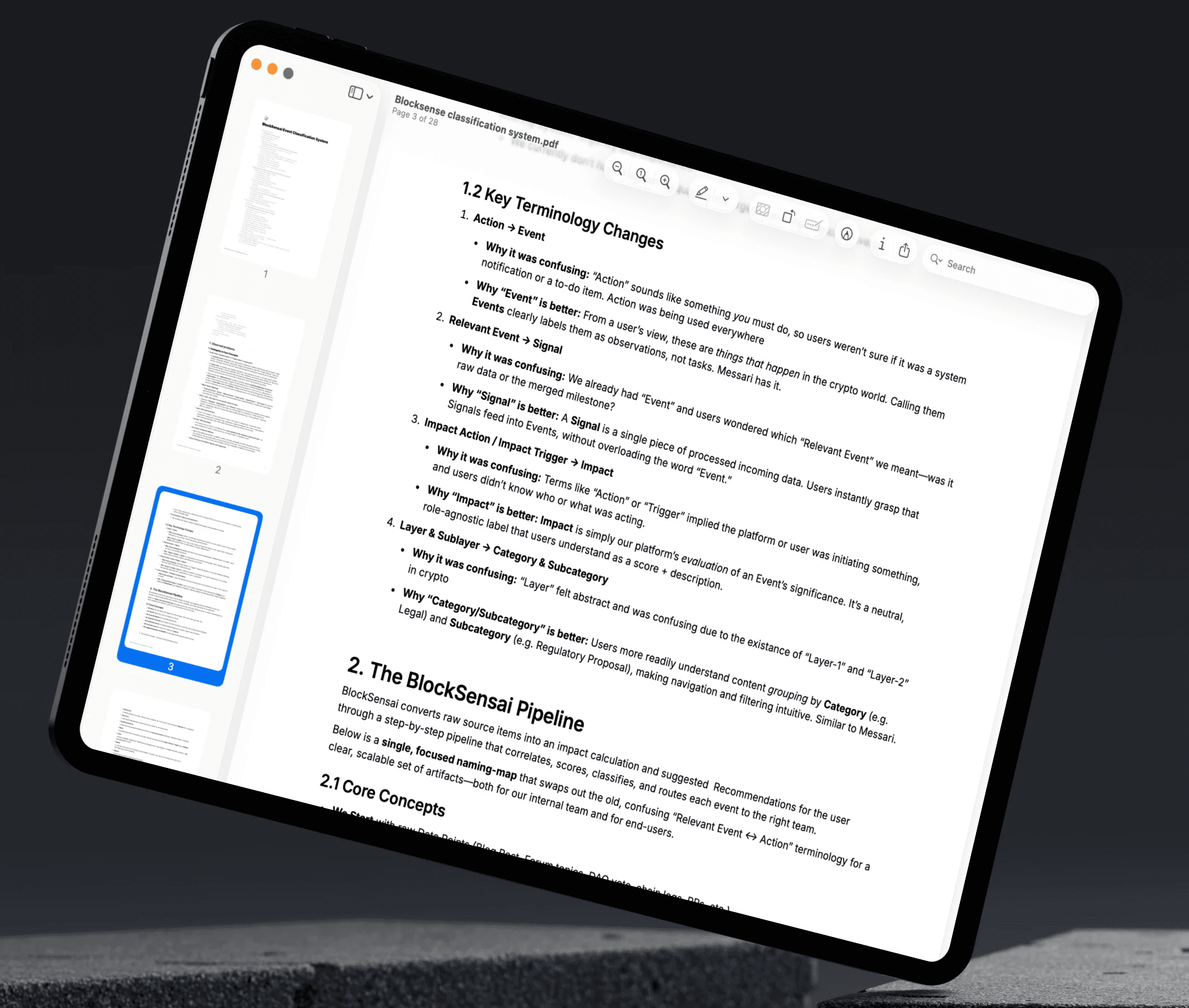
The initially proposed structure by the project team followed the language of crypto forums and technical pipelines, while the institutional users I interviewed described their work differently. News also sat awkwardly inside a governance-first model, and overlapping labels made summaries and metrics harder to understand.


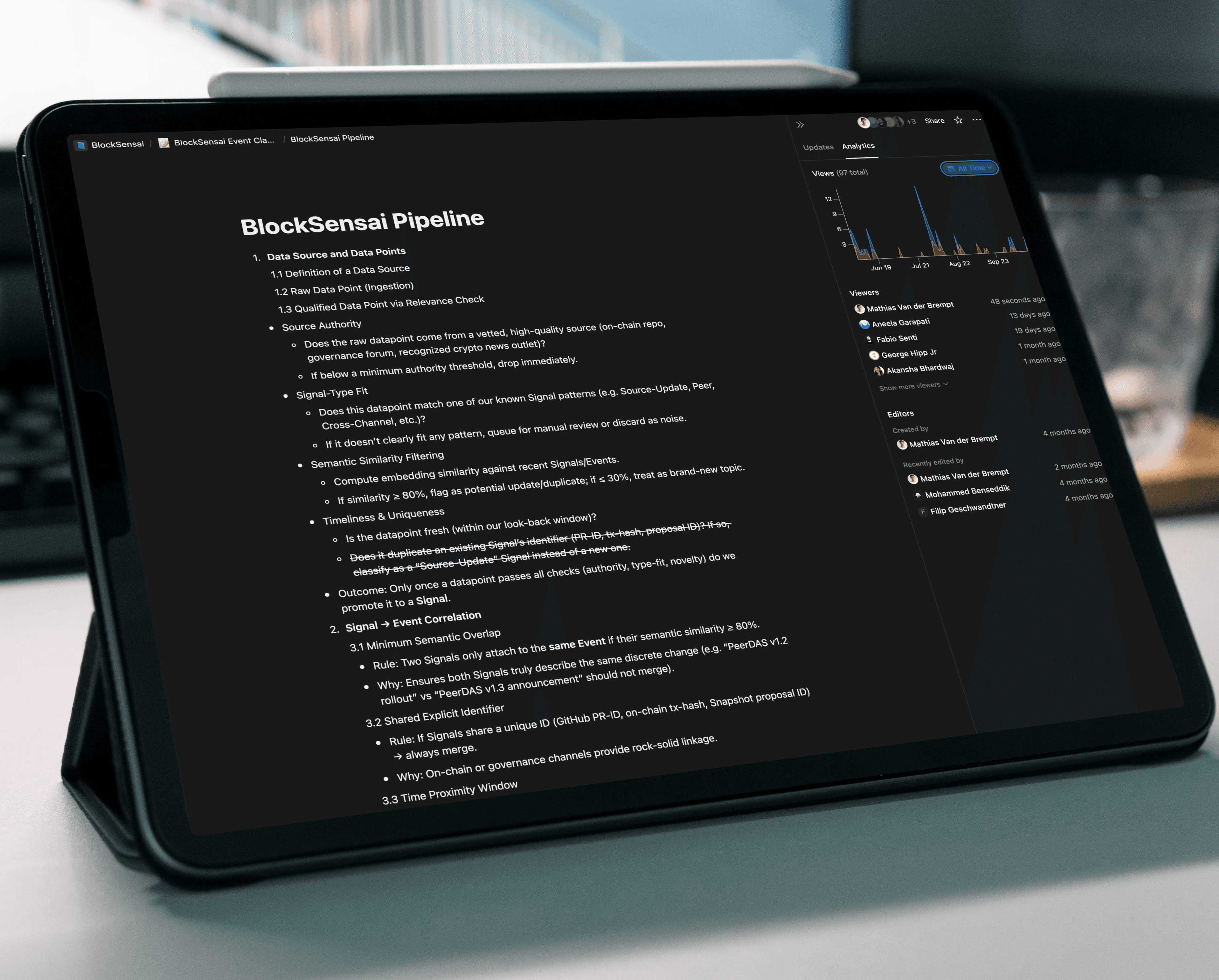
As data and wording is key in understanding a service, I focused on reworking that structure with a taxonomy and glossary covering proposals and news, then worked with the data team on the segmentation and classification behind it. This gave the product-, data- and engineering teams the same terminology and wording framework which increased both user experience and ease of collaboration.

Data architecture documentation
Pipeline documentation
Classification system documentation
BlockSensai proposal impact and lifecycle shown on a mobile phone
BlockSensai mobile task list with monitoring tasks and completion data

02 / Scope

Keeping the first release small enough to test

Keeping the first release small enough to test

For the proof of concept, I narrowed the idea to the information someone needed to judge a proposal. We brought repeated event information into one proposal view and separated price-sensitive news from governance changes whose effect were not immediately perceivable. That gave the team a manageable product to build and test in one six-week cycle.

For the proof of concept, I narrowed the idea to the information someone needed to judge a proposal. We brought repeated event information into one proposal view and separated price-sensitive news from governance changes whose effect were not immediately perceivable. That gave the team a manageable product to build and test in one six-week cycle.

BlockSensai proposal detail
BlockSensai product view
BlockSensai product architecture

Keeping a changing alpha consistent across screens

Keeping a changing alpha consistent across screens

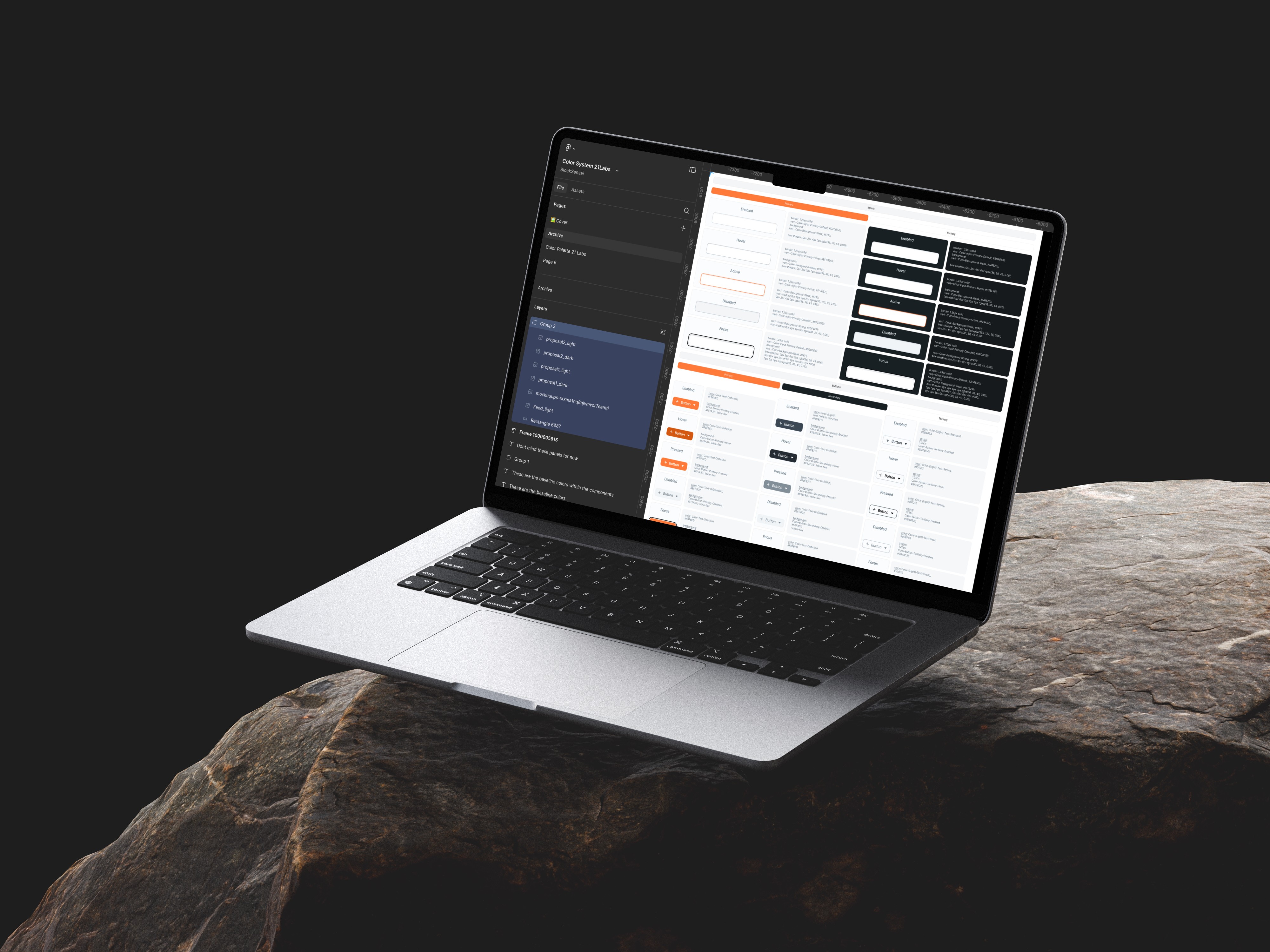
During the alpha, I kept the dashboards, feed cards and analysis modules within a small component system. I documented the tokens, colour scales, states and usage rules for light and dark modes, then worked through the details with engineering. This helped the team build dense screens faster and kept the interface more consistent as the product changed.

During the alpha, I kept the dashboards, feed cards and analysis modules within a small component system. I documented the tokens, colour scales, states and usage rules for light and dark modes, then worked through the details with engineering. This helped the team build dense screens faster and kept the interface more consistent as the product changed.

BlockSensai colour system
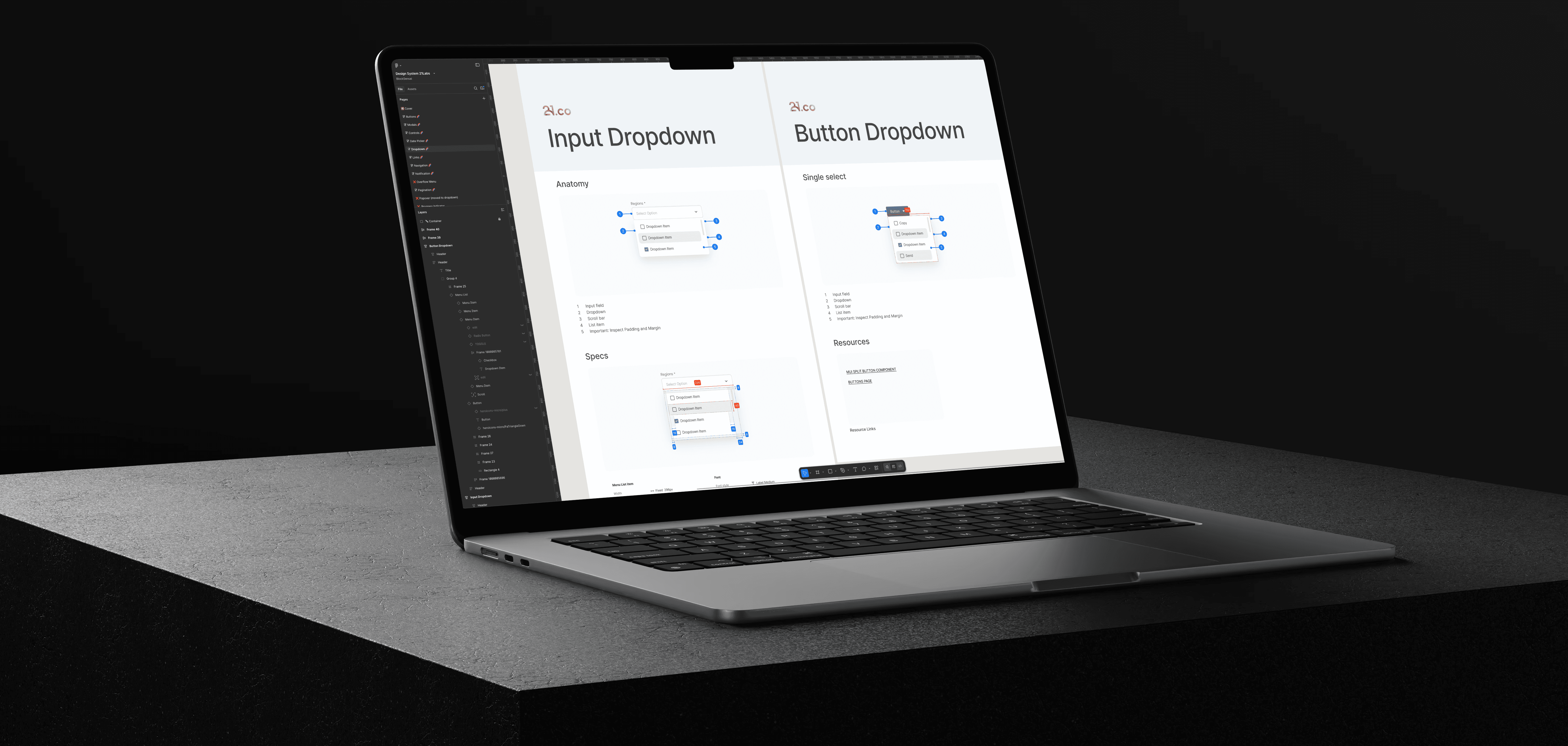
BlockSensai component documentation

03 / Implementation

Guiding the team through implementation

Guiding the team through implementation

I scoped the work with engineering and wrote separate guides for the data and front-end teams. The annotations connected each part of the interface to its data definitions, design tokens and layout rules, while the tickets made requirements and acceptance criteria explicit.

When delivery became difficult, I organised front-end work into dedicated page tickets and separated the UI build from API integration. This gave the team clearer tasks to work through alongside implementation reviews.

I combined the design work with roadmap and milestone planning, working with product and engineering to keep research, data requirements and interface delivery connected. Within our six-week cycles, I ran Scrum ceremonies including sprint planning, stand-ups and retrospectives, as well as stakeholder reviews and weekly design and implementation discussions. I used these rituals to review progress against the next milestone, resolve open questions and keep the team aligned as deadlines approached.

I managed two engineers during implementation phases and stayed involved in their day-to-day delivery questions. The page-level tickets gave us concrete work to plan and review, while separating UI implementation from API integration made the dependencies easier to discuss. I worked through design and implementation quality with the engineers as the alpha developed.

Data implementation guidance

Data implementation guidance. I linked the proposal interface to the definitions and rules behind summaries, lifecycle and classification.

Front-end implementation guidance

Front-end implementation guidance. I documented typography, spacing, borders and tokens for the same interface in light and dark modes.

Requirements in Linear

Requirements in Linear. The events-table ticket brings together column order, sorting, design tokens and data completeness.

Responsive behaviour

Responsive behaviour. The layout guide shows how navigation and content adapt across widths, with annotations for the smaller details.

References from LinkedIn
Like any good designer, Mathias has amazing attention to detail and is passionate about the look and feel of every aspect of a product. However, what separates him from other designers is his ability to pursue pixel perfection with the engineers, but also allow them to work quickly and accept trade offs. As anyone can imagine, this is always a constant conversation, but knowing when to push and when to accept is important in all roles and essential between engineers and designers. 
Portrait of George Hipp against a dark studio background
01 / 03

A shared data model and faster front-end delivery

A shared data model and faster front-end delivery

I used the research to rework how BlockSensai classified proposals and news, then designed the workflows and component system around that structure. Working with product, data science and engineering, I connected the interface to the data definitions and documented how it should be built, giving us a consistent foundation to extend the alpha.

I used the research to rework how BlockSensai classified proposals and news, then designed the workflows and component system around that structure. Working with product, data science and engineering, I connected the interface to the data definitions and documented how it should be built, giving us a consistent foundation to extend the alpha.

โ‰ˆ3ร—

โ‰ˆ3ร—

faster

Front-end delivery over four months. Internal delivery speed increased roughly threefold, while usability tests showed higher UI consistency as the alpha grew.

2

2

engineers

Managed during implementation phases. I scoped page-level work and separated UI implementation from API integration to make delivery tasks clearer.

30+

30+

protocols

Covered by a unified data model. I reworked the classification framework with data science and engineering for the feeds, timelines and metrics.

Turning a broad idea into a product the team could test

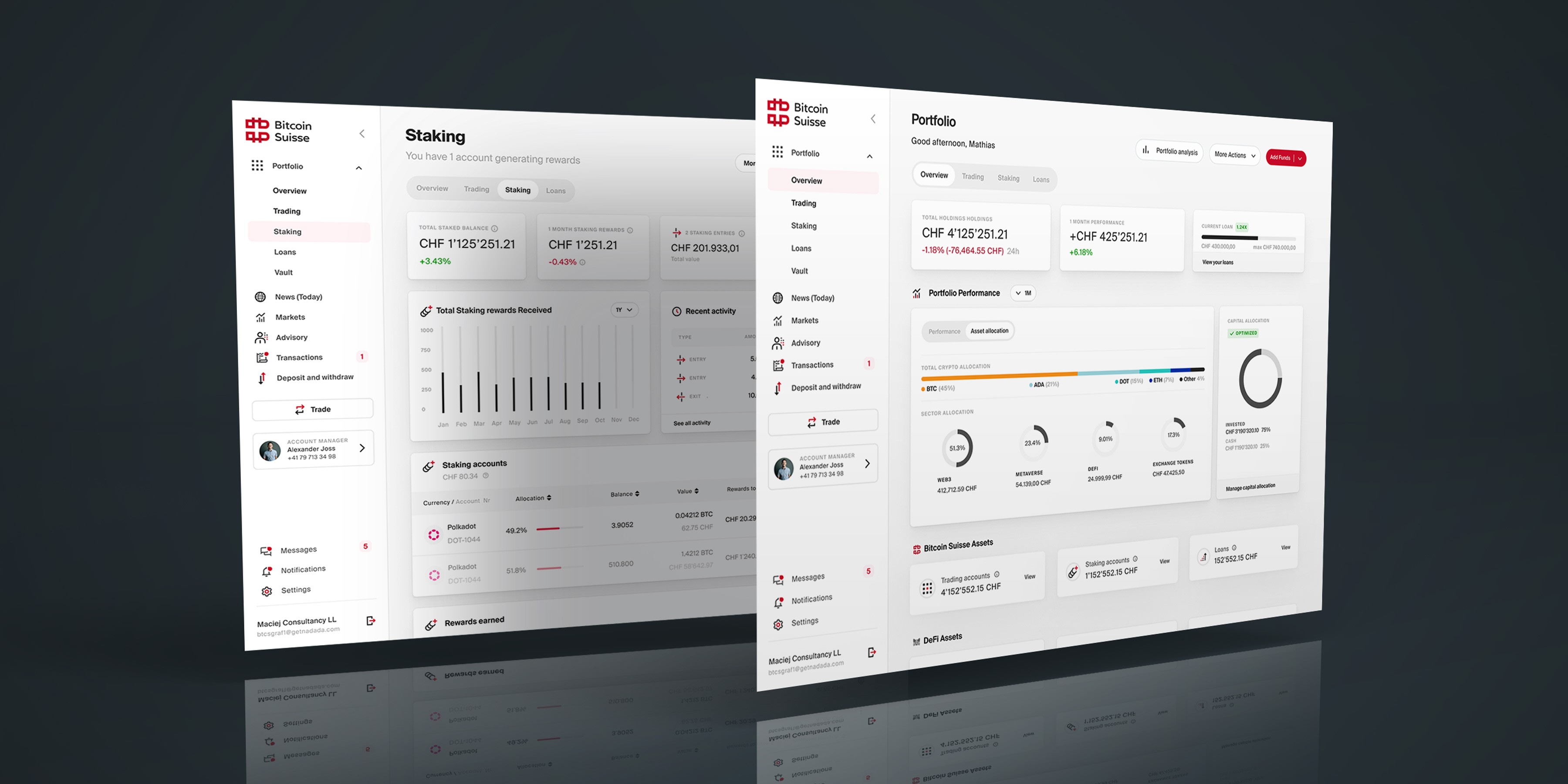
BlockSensai was a crypto intelligence product for institutional teams at 21Shares. I led discovery and design in 2025, working with six engineers, three data scientists and a product manager from the first concept through the alpha. We classified and scored governance proposals and news, then used that structure in dashboards, an intelligence feed and a later LLM experience.

The first data structure followed crypto forums and technical pipelines, but the institutional users I interviewed described their work in different terms. News also did not fit the governance-first model, and overlapping labels made the generated summaries and metrics harder to understand. Before refining the interface, I needed to help the team agree on what the product was describing and how those parts related.

Research that changed the data model

I interviewed people from MetaMask, Crypto.com, Messari and other crypto companies across five institutional roles. I combined those conversations with workshops and concept walkthroughs, then turned the findings into insight summaries, a value canvas and a weighted priority list. The research showed where people needed role-specific information, visible provenance and confidence, and a clear separation between proposal impact and the effect of events or news.

I replaced the governance-first terminology with a taxonomy and glossary covering proposals and news, and worked with the team on the segmentation and classification behind it. I also helped define the expected structure of the LLM summaries and a likelihood-of-approval signal used in proposal analysis. I led the product model, the workflow and how those outputs appeared in the interface, while the data scientists and engineers remained responsible for their specialist parts.

Narrowing the first release to one proposal journey

We worked in six-week cycles, moving from role-based research into a defined scope, usability sessions and implementation with engineering. For the proof of concept, I narrowed the idea to the information someone needed to judge a proposal. We combined repeated event information in one proposal view, and role-based risk and impact metrics made the event type and user perspective clear. Modular sections kept the first release manageable without closing off the longer-term direction.

We also challenged an assumption in the original model. Price-sensitive news could affect the market as soon as it appeared, while the impact of a governance proposal might depend on whether it passed. Separating those cases changed the classification model as well as what the interface needed to explain, so we resolved the distinction before designing how it would appear on screen.

Keeping the alpha consistent while the team built it

I designed the dashboards, feed cards, analysis modules and proposal view within a small component system for dense data. It covered spacing, typography, elevation, contrast, card variants and analysis states in light and dark modes.

Guiding the team through implementation

I scoped the work with engineering and wrote separate guides for the data and front-end teams. The annotations connected each part of the interface to its data definitions, design tokens and layout rules, while the tickets made requirements and acceptance criteria explicit.

When delivery became difficult, I organised front-end work into dedicated page tickets and separated the UI build from API integration. This gave the team clearer tasks to work through alongside implementation reviews.

I combined the design work with roadmap and milestone planning, working with product and engineering to keep research, data requirements and interface delivery connected. Within our six-week cycles, I ran Scrum ceremonies including sprint planning, stand-ups and retrospectives, as well as stakeholder reviews and weekly design and implementation discussions. I used these rituals to review progress against the next milestone, resolve open questions and keep the team aligned as deadlines approached.

I managed two engineers during implementation phases and stayed involved in their day-to-day delivery questions. The page-level tickets gave us concrete work to plan and review, while separating UI implementation from API integration made the dependencies easier to discuss. I worked through design and implementation quality with the engineers as the alpha developed.

The taxonomy gave product, data science and engineering one structure for proposals and news, while the component and page system gave us a consistent way to extend the alpha. Over four months, internal front-end delivery speed increased threefold, with higher UI consistency observed in usability tests.